
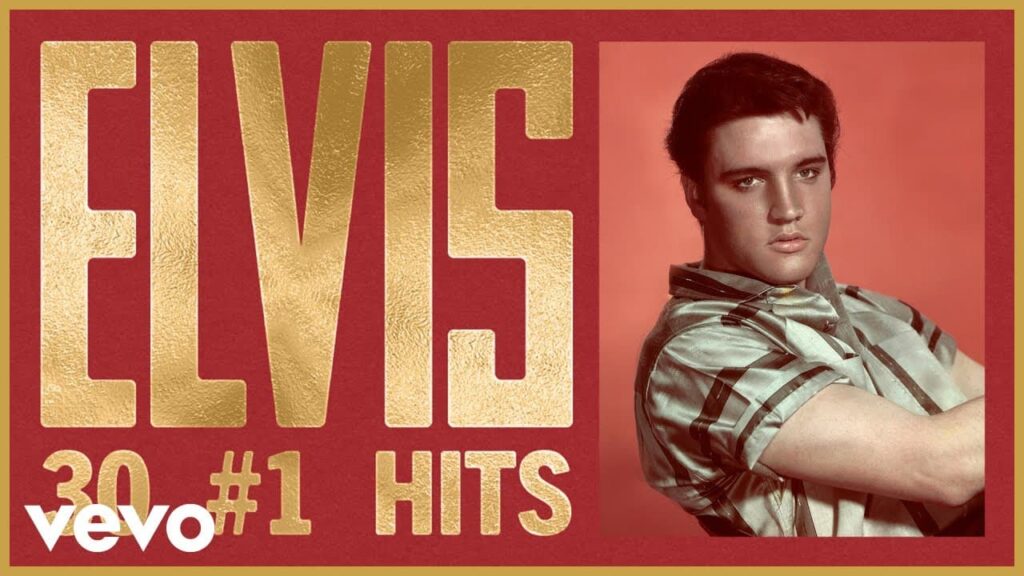
A blaze of desire and defiance that captured Elvis Presley’s final great pop moment
Released in the summer of 1972, “Burning Love” roared up the charts to reach No. 2 on the Billboard Hot 100, becoming Elvis Presley’s last Top 10 pop hit and a late career reminder of his unmatched command of urgency and heat. The song anchored the album Burning Love and Hits from His Movies Vol. 2, arriving at a time when Presley’s cultural position was often framed through nostalgia rather than dominance. Yet this record cut through the era’s noise with unmistakable force, reconnecting him to the raw electricity that first made his voice feel dangerous.
What makes “Burning Love” endure is not a complex narrative or ornate metaphor, but its absolute commitment to sensation. The lyric is elemental. Fire, fever, desire, surrender. Presley does not philosophize about love; he is overtaken by it. From the opening lines, the song plunges into a physical experience that feels unstoppable, almost reckless. Love here is not romantic comfort. It is combustion. It threatens to consume him entirely, and that risk is precisely the point.
Musically, the track is built for propulsion. The insistent rhythm pushes forward without pause, while the backing vocals surge like a crowd urging the singer onward. The arrangement blends early rock intensity with the muscular polish of early 1970s production, giving Presley a platform that feels modern without diluting his identity. His vocal performance is commanding yet strained in the most compelling way. You hear effort. You hear breath. You hear a man leaning into the song as if it might collapse without him.
Context deepens its impact. By 1972, Elvis Presley was navigating a complicated phase of his career. The world still recognized his legend, but the industry had shifted, and younger artists dominated the charts. “Burning Love” did not attempt reinvention. Instead, it doubled down on what Presley had always done best. Emotional immediacy. Sexual tension. A voice that sounded like it had something at stake. That authenticity is why the song resonated across generations and briefly returned him to the center of the pop conversation.
Lyrically, the repetition reinforces obsession rather than simplicity. Each refrain feels less like a chorus and more like a confession spiraling out of control. Presley’s delivery grows more urgent as the song progresses, transforming desire into something almost spiritual in its intensity. There is no resolution promised, no calm after the flame. The song ends still burning, which may be its most honest gesture.
Over time, “Burning Love” has come to symbolize the final flare of Presley’s pop chart dominance, but reducing it to a historical footnote misses its deeper power. This is not the sound of an artist fading. It is the sound of one summoning every remaining spark to remind the world who he is. Decades later, the fire still spreads the moment the needle drops.