
The Enduring Power of a Simple Plea: A Melancholy Boogie-Woogie Lament for Lost Love.
There are certain records that, the moment the needle drops, transport you back to a specific time, a feeling, a moment of cultural change. The air might feel electric, thick with the scent of popcorn and teenage dreams, or perhaps it’s a quiet, late-night companion on an old tube radio. One such essential slice of Americana is “Poor Me,” a track that, despite its seemingly downbeat title, possesses the irresistible, rolling energy characteristic of its legendary performer, Fats Domino. It’s a song that proves the blues, when filtered through the joy of New Orleans rhythm and the sheer charisma of a musical titan, can make you want to dance even as you contemplate your own misfortune.
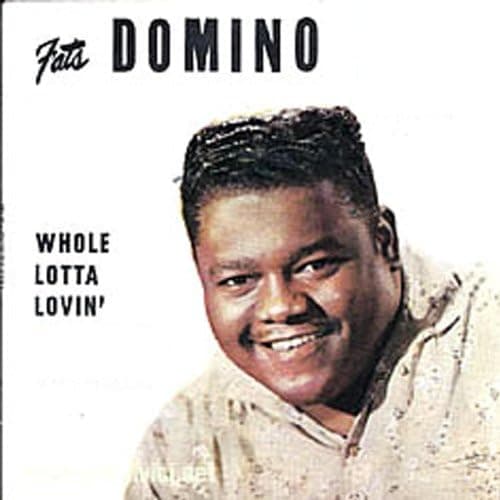
The story of “Poor Me” is wrapped up in the incredible ascent of Antoine “Fats” Domino Jr. and the powerhouse New Orleans sound he forged with his long-time collaborator, producer, and co-writer, Dave Bartholomew. There are actually two distinct chart entries for songs titled “Poor Me” by Fats Domino, a testament to the prolific nature of his early career. The earliest version, titled “Poor Poor Me” (which he co-wrote with Dave Bartholomew), was released in August 1952 on Imperial Records (catalog number 5204) with “Trust in Me” as the B-side. This initial pressing peaked at No. 10 on the U.S. R&B chart, showing that even in its infancy, the song struck a chord with the rhythm and blues audience.
However, the track that truly became a signature, the one most often recalled with that fond, nostalgic sigh, is the one that reached the very pinnacle of the charts in 1955. This second, later Imperial single, “Poor Me,” coupled with “I Can’t Go On (Rosalie),” hit an astonishing No. 1 on the R&B Best Sellers in Stores chart in November 1955, capping off a remarkable streak of three consecutive No. 1 hits for Fats that year. While it didn’t cross over significantly into the Pop charts—a barrier he would famously shatter with later hits like “Ain’t That a Shame”—it solidified his unassailable status as a king of the rhythm and blues world just as rock and roll was poised to explode. This 1955 version is the one that captures the definitive sound of early rock and roll, one foot firmly in the boogie-woogie of the past, the other stepping confidently into the future.
The lyrical meaning of “Poor Me” is disarmingly simple and universally relatable. It’s a straightforward, heartfelt expression of sorrow and confusion over a lost love. Fats Domino is a master of conveying deep emotion without melodrama. The lyrics aren’t complicated; they paint a picture of utter despair: “Well, my baby left me, what I’m gonna do is hard to tell.” But it’s the delivery that matters. That familiar, warm, slightly slurred New Orleans vocal delivery, coupled with his signature triplet-heavy piano playing, takes the self-pity out of the lament. He doesn’t wallow; he expresses his pain with an honest, humble shrug and then pours it all into the keys.
The song is a perfect example of the classic New Orleans R&B style that Fats Domino and Dave Bartholomew perfected. It’s rooted in the barrelhouse blues and the rollicking “second line” street rhythms of the Crescent City. The piano drives the melody with a joyful, rolling boogie that, in a beautiful paradox, counters the sadness of the words. It’s a melancholy lament wrapped in a celebratory dance, echoing the very spirit of New Orleans itself, where grief and joy often walk hand-in-hand down the same street. For those of us who grew up with this music, “Poor Me” isn’t just a record; it’s the sound of a simpler time, a reminder that even heartbreak could be handled with a little style, a little rhythm, and a lot of soul.