
The Last Great Rambler: A Journey Through a Life Lived on the Road
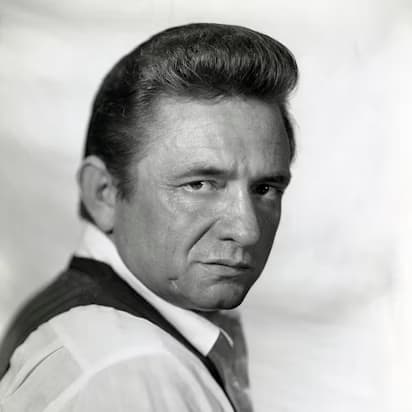
There are certain songs that, the moment the first notes hit, transport you back to a specific time, a specific feeling—the romance of the open road, the dust on an old map, the scent of a diner coffee at sunrise. “I’ve Been Everywhere,” as recorded by the incomparable Johnny Cash, is one of those timeless pieces. It’s a song that speaks to the wanderer in all of us, a testament to a life spent moving, seeking, and seeing the wide world.
The Man in Black’s Late-Career Masterpiece
The version most of us hold dear, in that deep, gravelly baritone that could settle a riot, was released by Johnny Cash in 1996 on his second volume of the acclaimed American Recordings series, the album Unchained (also known as American II: Unchained). Unlike the first sparse, acoustic effort, this record saw the Man in Black backed by a full band: none other than Tom Petty and the Heartbreakers, adding a comfortable, rolling country-rock groove that perfectly suited the nomadic theme. Curiously, Cash’s version was not a charting single on the Billboard Country or Hot 100 charts at the time of its release. The song was a deep cut on a critically revered album that cemented his late-career resurgence, proving its power not through chart statistics, but through its persistent presence in pop culture, notably appearing in commercials for Citgo and Choice Hotels years later.
From Down Under to the Dusty Winnemucca Road
What many casual listeners may not realize is that this iconic American-road-song is actually an import from the other side of the world. “I’ve Been Everywhere” was originally penned in 1959 by Australian country songwriter Geoff Mack, and in that initial form, it listed a dizzying array of Australian towns, from Taree to Wollongong. It became a smash hit Down Under for singer Lucky Starr in 1962. The story of its transition to the North American hemisphere is pure, classic country music lore: Mack’s publisher felt the tune had international potential and urged him to rewrite it with North American toponyms. The first major U.S. success came that same year, in 1962, for Canadian-born country star Hank Snow, whose version went all the way to Number 1 on the Billboard Country Chart and peaked at No. 68 on the Hot 100. Cash’s recording, therefore, is a magnificent cover—a beloved standard he made wholly his own, transforming it from a mere novelty song into a weary, authentic travelogue.
The Poignant Meaning of the Perpetual Journey
While the surface meaning is a dazzling, rapid-fire recitation of places—Reno, Chicago, Fargo, Minnesota—the enduring power of Johnny Cash’s rendition lies in the weight he gives every word. It’s the musical equivalent of unrolling an old, creased map covered in pencil marks and coffee stains. The song, in his hands, becomes a poignant reflection on a life lived out of a suitcase. When he growls, “I’ve been everywhere, man… Travel, I’ve had my share, man,” it’s not a boast; it’s a statement of fact from a man who had truly crisscrossed the continent countless times, playing in every dusty honky-tonk and grand concert hall. His low-voiced spoken introduction, “I was totin’ my pack along the dusty Winnemucca road…,” instantly grounds the track in the reality of the itinerant worker, the hitchhiker, the endless traveler. For older listeners, particularly those who remember the days before interstates made the country feel so small, it evokes a powerful sense of nostalgia for a time when every road trip felt like an epic adventure. It’s a beautifully simple song that captures the spirit of freedom and the quiet, solitary cost of that freedom—a world-weariness that only Johnny Cash could deliver with such profound honesty.