
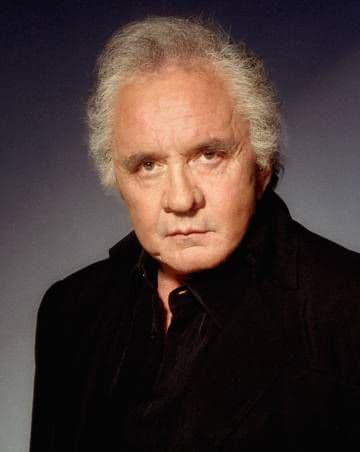
The Lonesome Cry of a Heart That Refuses to Let Go of Lost Love
The world of music has offered us few figures as utterly singular and profoundly resonant as Johnny Cash. His voice—a low-register rumble, worn smooth by life’s hard edges, yet capable of delivering the tenderest heartache—is the sound of American memory. When we reach back to the early days, to the very foundation of the legend, we find a raw, stripped-down gem that speaks volumes about the man and the sound he was forging: the beautiful, aching lament, “So Doggone Lonesome.”
Released in December 1955, this wasn’t just another song on a shellac disc; it was one half of a monumental pairing. Though its eventual destiny was to be the B-side, coupled with a little tune called “Folsom Prison Blues,” the single release was a double-barreled blast that announced the arrival of a star. In a twist of fate, both sides took off, leading the record to peak at No. 4 on the Billboard C&W Best Sellers chart in early 1956. This astonishing achievement—a simultaneous Top Five placement for both A and B sides—cemented Cash’s place in the firmament of Sun Records, alongside the likes of Presley and Perkins.
The story behind “So Doggone Lonesome” is as straightforward and pure as the country music tradition itself. Written by Johnny Cash himself, it stands as a testament to his early, formidable songwriting ability. The song is a candid expression of the private grief of a man trying his best to carry on in public after a devastating breakup, only to be crushed by the loneliness that follows when the sun goes down. The lyrics paint a clear, unvarnished picture of internal struggle: “I do my best to hide this lowdown feelin’ / I try to make believe there’s nothing wrong,” he sings. But the pretense is fragile, especially “until that moon comes shining through.” It’s in those quiet moments, stripped of daylight distraction, that the truth hits: “And then I get so doggone lonesome.”
More than a simple break-up song, it’s a profound exploration of unshakeable, stubborn love. The protagonist isn’t wallowing in self-pity; he’s rationalizing an irrational devotion: “Well I know I’ll keep on loving you / ‘Cause true love can’t be killed / I ought to get you off of my mind / But I guess I never will.” For a generation that often valued steadfastness above all else, this sentiment—the refusal to move on, the belief that “true love can’t be killed”—resonated deeply. It’s the sound of stoic perseverance, even when the only reward is endless waiting and an empty room.
The recording itself is historically significant, showcasing the signature, stark sound of The Tennessee Two—Luther Perkins on the electric guitar and Marshall Grant on upright bass—and the innovative production of Sam Phillips at Sun Studio. That famous, relentless “freight train” rhythm, which became the bedrock of Cash’s career, is already fully formed here, driving the listener forward even as the lyrics pull them into the depths of sorrow.
It’s a song that carried a special personal weight for Cash, too. He was a great admirer of country music titan Ernest Tubb, and lore has it that Cash wrote the song with Tubb in mind. It was a massive validation when Tubb later recorded his own version and performed it on the Grand Ole Opry—a moment Cash reportedly considered a sign that he had truly “made it” as an artist.
Listening to “So Doggone Lonesome” now, it’s like opening a dusty old photo album. The sparse arrangement, the echo of the voice, the simple yet eternal heartbreak—it all transports you back to a time when feelings were conveyed with fewer notes and more truth. It’s an honest piece of work from a man whose honesty became his defining trait. It reminds us that no matter how much the world changes, that particular brand of solitary, deep-seated ache remains eternal.