
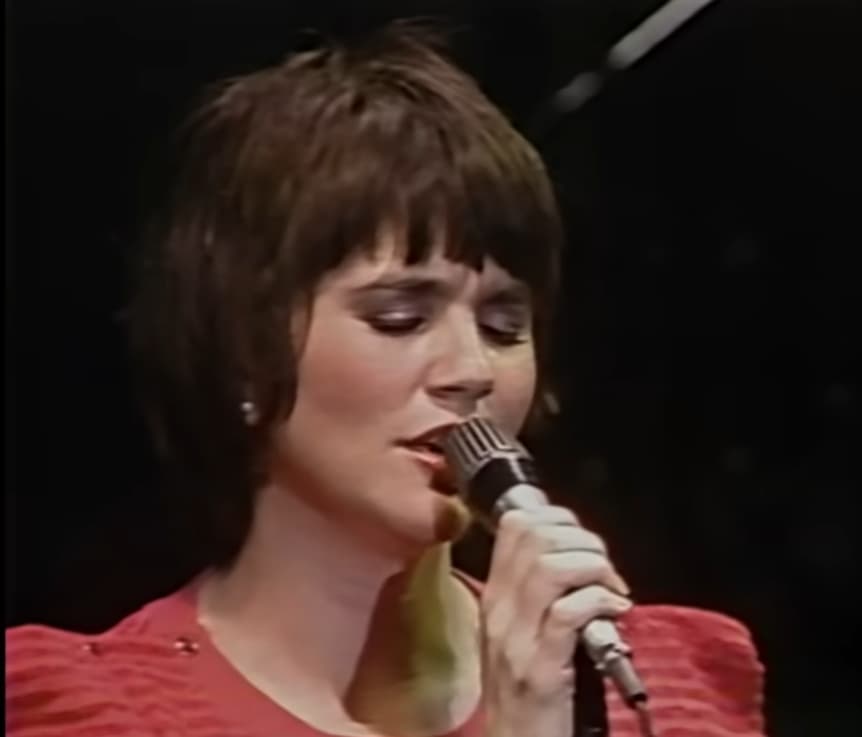
Sometimes a Single Glance Is Enough to Change the Entire Landscape of the Heart
When Linda Ronstadt released “Just One Look” as a single from her acclaimed album Living in the U.S.A. in 1979, the recording climbed to No. 44 on the Billboard Hot 100 and reached No. 5 on Billboard’s Adult Contemporary chart, further reinforcing her remarkable ability to transform familiar material into something distinctly her own. Originally written by Gregory Carroll and Doris Payne and first immortalized by Doris Troy in 1963, the song found new life in Ronstadt’s hands, becoming another chapter in a career built upon the art of interpretation.
What makes “Just One Look” endure is not complexity but immediacy. Its premise is deceptively simple: love arrives in an instant. Yet beneath those straightforward lyrics lies one of popular music’s most enduring fascinations—the idea that an entire emotional future can be glimpsed in a single moment. The song speaks to that almost mythic experience of recognition, when attraction feels less like a gradual process and more like a revelation.
For Linda Ronstadt, whose greatest recordings often revolved around emotional clarity rather than lyrical abstraction, the song was a natural fit. Throughout the 1970s she became one of popular music’s definitive interpreters, bringing extraordinary conviction to songs she did not write herself. Her gift was never merely technical. She possessed a rare ability to inhabit a lyric so completely that familiar words seemed newly discovered. On “Just One Look,” she elevates a classic piece of early-1960s pop into something more expansive—less innocent perhaps, but richer with experience.
The emotional power of Ronstadt’s version comes from the tension between youthful certainty and adult understanding. The narrator insists that one glance was enough to know the future, yet Ronstadt sings with the wisdom of someone who understands the risks hidden within such certainty. Her voice carries both exhilaration and vulnerability, transforming what might have been a simple declaration into a meditation on longing itself.
Musically, the recording exemplifies the polished California sound that defined much of Ronstadt’s late-1970s work. The arrangement is bright, energetic, and meticulously crafted, yet it never overshadows the vocal performance. Instead, the instruments create a sense of momentum that mirrors the song’s central idea: emotions moving faster than reason can follow. The rhythm pushes forward with confidence, while Ronstadt’s phrasing supplies the human element—the heartbeat beneath the melody.
Viewed from the distance of decades, “Just One Look” represents more than a successful cover version. It stands as a testament to Linda Ronstadt’s extraordinary talent for finding new emotional dimensions within established songs. In her hands, a classic pop tune becomes a reflection on destiny, desire, and the mysterious speed with which lives can change. Like the glance described in its lyrics, the song arrives quickly. Yet its emotional echo lingers far longer than anyone expects.