
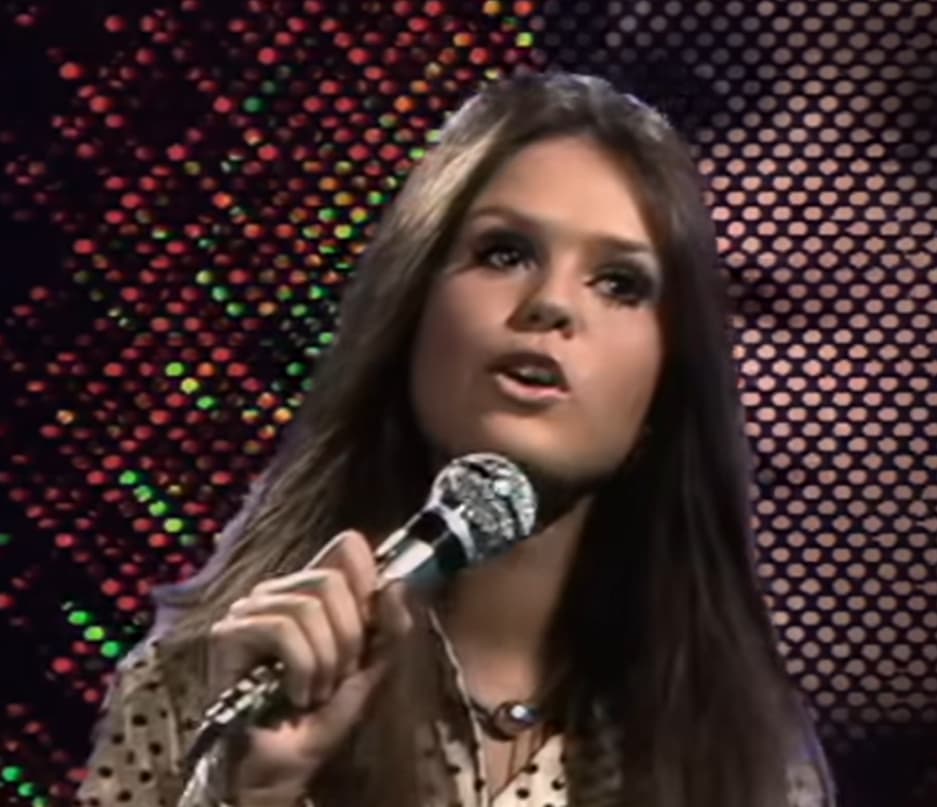
A Young Voice Turned Heartbreak into a Timeless Bloom
When Marie Osmond stepped into the spotlight with “Paper Roses” in 1973, few could have predicted that a 14-year-old singer would deliver one of country music’s most memorable crossover hits. Released as the title track from her debut album Paper Roses, the song soared to No. 1 on Billboard’s Hot Country Singles chart and reached No. 5 on the Billboard Hot 100, an extraordinary achievement that instantly distinguished Marie from the pop success already associated with the Osmond family. It was not merely a successful debut—it was a declaration of artistic identity.
The song itself carried a history long before Marie recorded it. Originally popularized by Anita Bryant in 1960, “Paper Roses” found new life in Marie’s hands. Yet what makes her version endure is not simply youthful charm or commercial appeal. It is the striking contrast at the heart of the performance: a young voice expressing emotions far older than its years.
At its core, “Paper Roses” is a meditation on illusion and disappointment. The song’s central metaphor is elegantly simple. Paper roses may look beautiful from a distance, but they lack the fragrance, vitality, and authenticity of real flowers. In the same way, the narrator discovers that a seemingly perfect romance was built on appearances rather than genuine affection. The realization arrives with quiet devastation. What once seemed precious is revealed as fragile artifice.
Marie’s interpretation gives this theme unusual emotional power. Rather than approaching the lyric with bitterness, she sings with a blend of innocence and awakening wisdom. The heartbreak is real, but so is the sense of personal growth. The narrator is not merely mourning lost love; she is learning to distinguish between what is genuine and what is merely convincing. That subtle emotional progression transforms the song from a simple tale of romantic disappointment into a universal reflection on trust and self-discovery.
Musically, the recording balances traditional country instrumentation with the polished production values of early-1970s Nashville. Bright acoustic textures, steady rhythm, and memorable melodic phrasing create an inviting surface that contrasts beautifully with the sadness beneath. This tension between cheerful musicality and emotional vulnerability is one of the recording’s greatest strengths. Listeners are drawn in by its warmth before recognizing the ache hidden within the lyrics.
More than five decades later, “Paper Roses” remains a defining moment in Marie Osmond’s career. It introduced a distinctive voice to country music and demonstrated that emotional truth does not depend on age. The song continues to resonate because its message is timeless. Nearly everyone encounters a moment when appearances crumble and reality takes their place. In that sense, the paper roses of the title are far more than a romantic symbol—they are reminders of the lessons that shape us, teaching us to seek authenticity in a world often filled with beautiful imitations.
The enduring appeal of “Paper Roses” lies in that delicate balance between innocence and experience. It is a song about heartbreak, certainly, but also about clarity. And like the finest recordings of its era, it continues to speak across generations, offering wisdom wrapped in a melody that never seems to fade.