
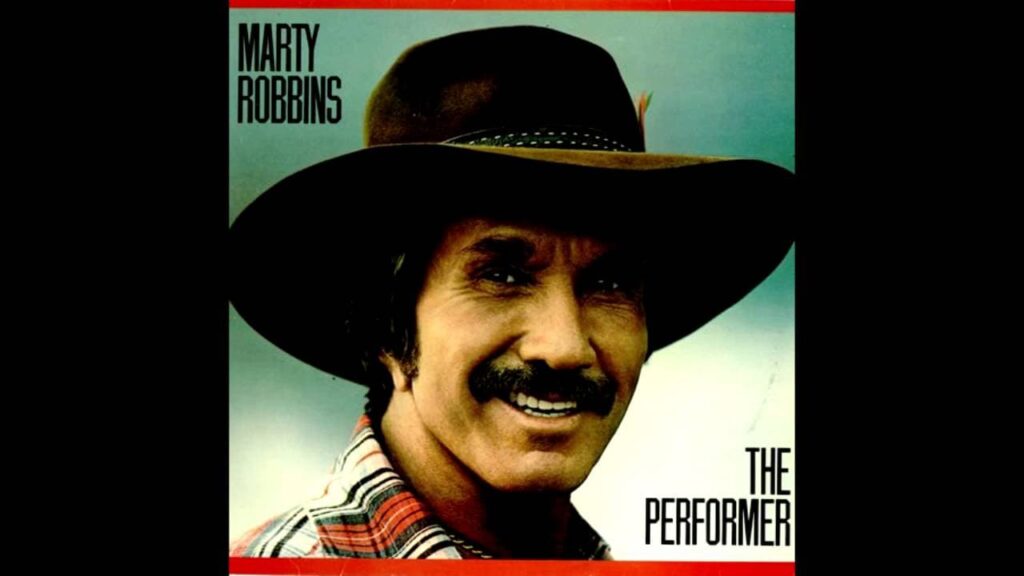
Portrait of quiet disorientation, where love has slipped away and left only unanswered echoes
Upon its release during Marty Robbins early Columbia years, Confused and Lonely emerged in a period when Robbins was establishing himself as a consistent presence on the country charts, with a steady run of singles that spoke directly to postwar American solitude. While the song was later collected on Columbia albums that preserved his early recordings, its true identity has never rested on chart statistics alone. It belongs to that formative chapter of Robbins career when emotional clarity mattered more than commercial positioning, and when restraint was often more devastating than drama.
At its core, Confused and Lonely is a study in emotional suspension. The song does not rush toward heartbreak nor does it dramatize betrayal. Instead, it lingers in the aftermath, in the uncertain space where love has already faded but memory has not yet learned how to let go. This was a territory Marty Robbins understood instinctively. Long before his name became synonymous with Western epics and cinematic ballads, he was a master of interior emotion, of songs that unfolded quietly and trusted the listener to meet them halfway.
The lyric structure of Confused and Lonely is deceptively simple. There are no elaborate metaphors or narrative twists. What gives the song its weight is repetition, the return to the same emotional state from slightly different angles, as though the singer is pacing a small room, replaying the same thoughts with growing exhaustion. Confusion here is not chaos. It is numbness. Loneliness is not isolation from others, but disconnection from certainty itself. Robbins sings not as a man in crisis, but as one who has already accepted that the answers will not arrive tonight.
Musically, the arrangement reinforces this emotional stillness. The tempo remains measured, almost cautious, allowing each phrase to settle before the next appears. Robbins vocal performance is notably restrained, his phrasing unforced, his tone warm but subdued. He does not plead with the song. He listens to it. This approach would become a defining characteristic of his early recordings, where emotional authority came from calm delivery rather than vocal power.
In the broader cultural context of early 1950s country music, Confused and Lonely reflects a moment when the genre was increasingly concerned with private emotion rather than public spectacle. These were songs meant for late hours, for radios left on in empty kitchens or bedrooms. Robbins ability to articulate emotional ambiguity placed him among the most perceptive interpreters of that era, even when the songs themselves were modest in scope.
What has allowed Confused and Lonely to endure is precisely its refusal to resolve. There is no final revelation, no turning point, no promise of recovery. The song ends where it began, suspended in feeling. In doing so, Marty Robbins captured a truth that remains timeless. Some heartbreaks do not announce themselves with drama. They arrive quietly, settle in, and teach a person how to live with questions instead of answers. That quiet recognition is the lasting legacy of Confused and Lonely, and it remains one of the most honest moments in Robbins early catalog.