
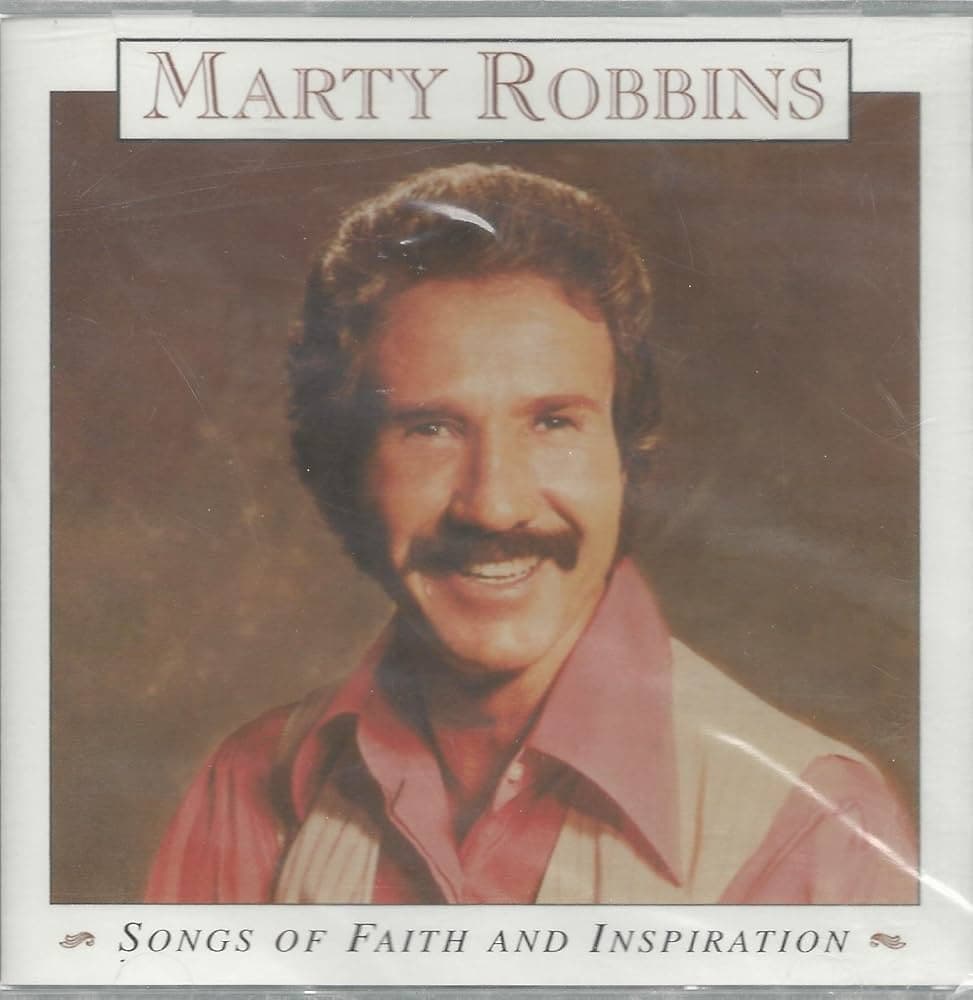
The Quiet Power of Reflection and Memory in Marty Robbins’ Musical World
“Inspiration For A Song” stands as a subtle yet profound testament to Marty Robbins’ unmatched ability to transform fleeting moments of thought into enduring musical expression. Released in 1962 on the album “Portrait of Marty”, the song reached modest chart recognition but left an indelible mark on listeners attuned to the nuanced craftsmanship of Robbins’ storytelling. While it did not dominate the pop charts in the manner of his later hits, the song’s understated charm exemplifies the quieter, introspective side of a career often celebrated for sweeping western ballads and dramatic narrative compositions.
From the very first notes, “Inspiration For A Song” envelops the listener in a soft, deliberate pace, allowing space for the lyrics to breathe and resonate. The composition employs Robbins’ signature smooth vocal delivery, emphasizing phrasing and subtle inflection rather than sheer volume or theatricality. The arrangement is spare but intentional, with gentle guitar lines and restrained percussion that underscore the song’s contemplative mood. This is a track that thrives in quiet reflection, where the pauses between notes become as meaningful as the notes themselves.
The lyrical narrative presents a fascinating meditation on the origins of creativity, exploring the often-invisible sparks that ignite the songwriter’s muse. Robbins portrays the songwriting process as both intimate and universal, suggesting that inspiration is never forced but instead emerges from observation, emotion, and the quiet spaces of everyday life. Unlike more overtly autobiographical compositions, the song frames inspiration almost as an external force—an elusive, almost ethereal companion that the artist must recognize and honor. Each verse reads like a distilled thought, a moment captured from the artist’s consciousness and given permanence through melody.
Beyond its technical composition and lyrical nuance, the cultural significance of “Inspiration For A Song” lies in its demonstration of Robbins’ versatility. He was an artist capable of commanding stadiums with dramatic storytelling yet equally adept at creating introspective, almost private works that reveal his understanding of human emotion in delicate detail. This duality cements Robbins’ reputation not merely as a country singer or storyteller but as a chronicler of emotional landscapes, attuned to the subtle rhythms of thought and feeling.
In listening to “Inspiration For A Song” today, one experiences a timeless reflection on the act of creation itself. The song does not boast of its achievements; instead, it offers a quiet, elegant exploration of the spaces in which art and life intersect. Through its gentle cadence and evocative lyrics, Robbins invites listeners into his inner world, presenting a piece that remains as affecting now as it was over half a century ago, a delicate reminder that sometimes the most enduring inspiration comes from the simplest, most attentive observation.