
A confession of love measured not by volume, but by the quiet arithmetic of longing.
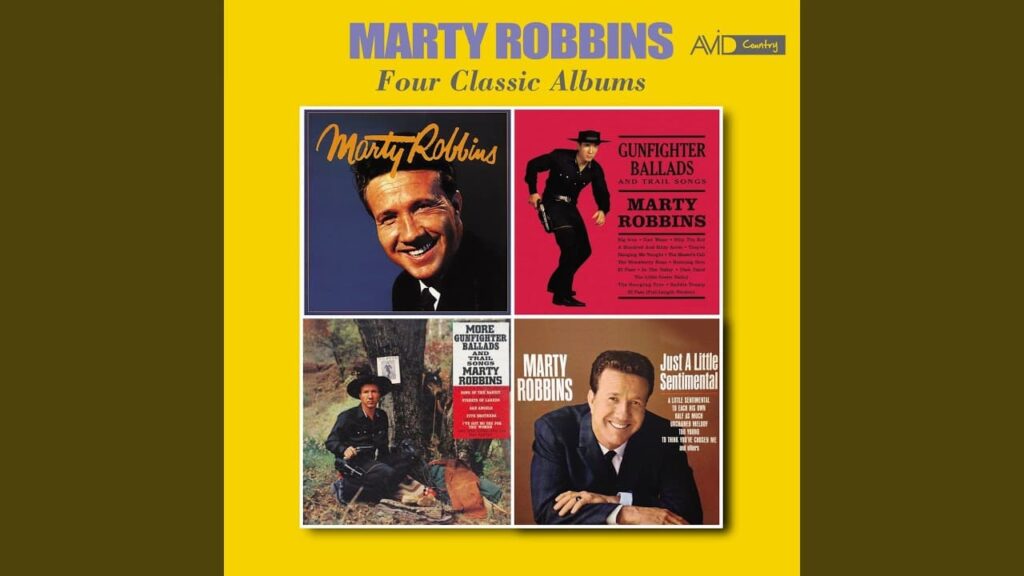
Released in 1960, Marty Robbins carried Half As Much into the American mainstream as a rare country ballad that crossed over decisively, reaching the Top 10 of the Billboard Hot 100 while also commanding the country charts. The song appeared on the album More Marty Robbins, a record that captured Robbins at a moment when his voice was becoming a bridge between Nashville tradition and pop accessibility. In an era dominated by grand gestures and rising production gloss, this song arrived with restraint, clarity, and emotional gravity.
Half As Much was written by Curley Williams, and its genius lies in how little it demands from the listener in order to devastate them. The lyric does not beg for eternal devotion or promise cinematic romance. Instead, it frames love as a simple equation. If the beloved could love the singer half as much as he loves them, it would be enough. That conditional phrasing is the song’s quiet thunder. It implies imbalance, vulnerability, and acceptance all at once. Robbins does not dramatize heartbreak. He dignifies it.
Vocally, Robbins approaches the song with an almost conversational intimacy. His phrasing is measured, never indulgent, allowing space between lines to carry as much meaning as the words themselves. There is no theatrical suffering here. The ache comes from composure. Each note feels chosen not to impress, but to confess. This restraint is precisely why the song resonated so deeply beyond the country audience. It speaks a universal emotional language, one that values sincerity over spectacle.
Musically, the arrangement supports this emotional economy. The instrumentation is gentle and unintrusive, placing Robbins’ voice firmly at the center. The melody moves with deliberate patience, reinforcing the lyrical theme of waiting and hoping rather than demanding or chasing. Nothing rushes. Nothing resolves too easily. The song seems to exist in a suspended moment, where longing is neither fulfilled nor denied, only acknowledged.
Culturally, Half As Much stands as a defining example of how country music entered the pop consciousness without losing its soul. Robbins did not dilute the genre to achieve crossover success. He trusted the emotional truth of the song, and the audience followed. For many listeners, this recording became an entry point into country music’s deeper emotional vocabulary, where love is often expressed through endurance rather than triumph.
Decades later, the song remains enduring because its premise never ages. Loving more than one is loved in return is a timeless human condition. Half As Much does not offer comfort in resolution. It offers recognition. And in that recognition, it becomes quietly unforgettable.