
A Quiet Farewell — the ache of remembering someone who’s gone
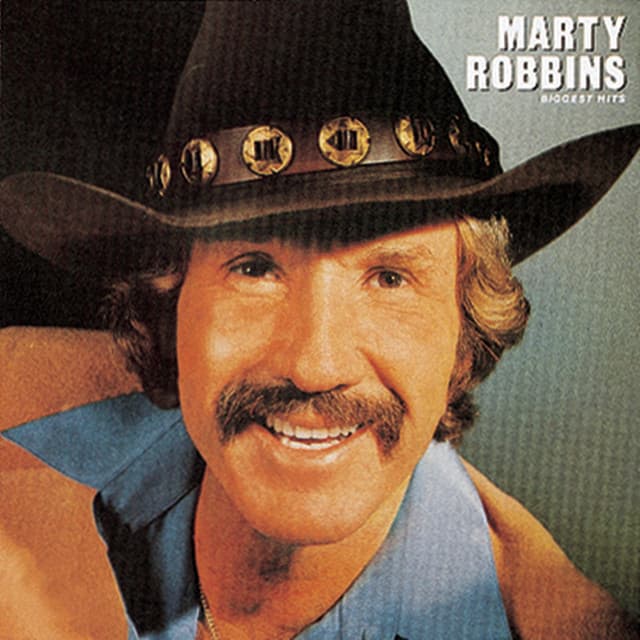
In My Greatest Memory, originally recorded by Marty Robbins and featured on his 1981 album Everything I’ve Always Wanted, we find a softened echo of regret and lingering love. The song emerged near the end of Robbins’ long career: the album was issued in 1981 under Columbia, standing among his final studio works.
Though “My Greatest Memory” was not released as a major chart-topping single — and so does not appear among the 17 number-one hits Robbins amassed over decades — its presence on Everything I’ve Always Wanted reveals a seasoned artist returning to personal themes of love, loss, and reflection, willing to let his voice cradle sorrow rather than chase headlines.
The story the song tells — and the heart behind it
“My Greatest Memory” is not a boisterous cowboy ballad, no gunfights or wide-open deserts. Instead, it is intimate heartbreak, an elegy written in gentle chords. Robbins sings of attempts to build “temporary bridges” — fragile scaffolding for love that could not last, love that “would only hold your love for just a day.”
The core lyric — “you’ll go down as my greatest memory” — carries the ambivalence of thankfulness and melancholy. On one hand, there is sorrow for the love lost, for a relationship that “built me up then tore me down.” On the other, there is tenderness, an act of preservation: even if love faltered, memory becomes a kind of sanctuary, a place where what once was still has meaning. The narrator offers no bitterness, only wistful resignation — a rare feat in heartbreak country songs, where blame or regret often lurk.
Musically, the arrangement is spare and unadorned, allowing Robbins’ warm baritone to carry the emotional weight. The simplicity highlights the vulnerability in the voice, resisting dramatic crescendos. Instead, the song unfolds with soft inevitability, as if the narrator is quietly admitting the end of a chapter.
It is this restraint — this refusal of grand gestures — that makes the song deeply affecting. There is dignity, even in heartbreak. The memory becomes more than history: it becomes a ghost companion, present, persistent. It is the kind of song that doesn’t seek closure, but acceptance.
Context within Marty Robbins’ later years
By 1981, Robbins had already weathered decades of enormous success. From the pop-tinged teen-idols of the 1950s to the dramatic Western epics like “El Paso”, then to the mature country ballads and heartfelt tributes of his 1970s peak.
Everything I’ve Always Wanted, the album containing “My Greatest Memory,” represents one of his final creative statements — a seasoned artist no longer chasing commercial hits but seemingly reflecting on life’s impermanence, on love and regret, on memory and longing.
In that light, “My Greatest Memory” acquires additional weight: it becomes not just a narrative of lost romance, but a quiet coda to a storied career. It speaks to the universality of longing, the human need to cling to what was, even when what is cannot remain.
Legacy — Why the song still matters
Though it never soared to the top of the charts, “My Greatest Memory” stands as a poignant example of Robbins’ artistry in his later years — stripped-down, emotional, honest. For listeners who have lived, lost, loved, and remembered — it offers a companionable sadness.
It is a reminder that not all great songs are club hits or career-defining singles. Some are soft confessions, enduring in their quietude. And in that way, “My Greatest Memory” remains one of Robbins’ most tender legacies: an elegy to love, to memory, and to the ache of letting go while remembering still.