
A carol that lowers its voice and asks the listener to listen inward rather than look upward
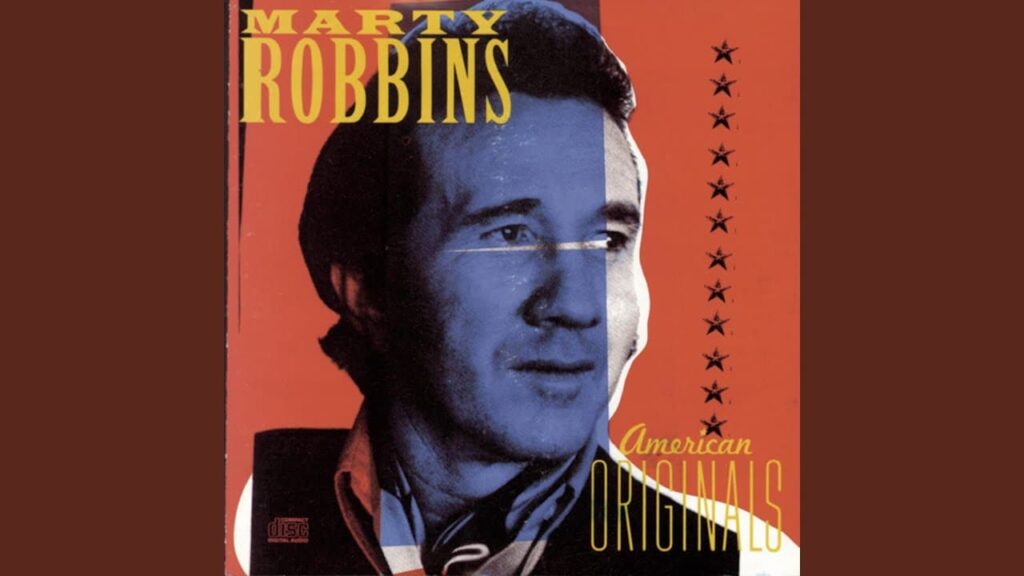
Released not as a chart driven single but as part of Marty Robbins’ 1965 Columbia Christmas album, CHRISTMAS WITH MARTY ROBBINS, O LITTLE TOWN OF BETHLEHEM occupies a quiet corner of his catalog. It never chased radio rotation or seasonal chart dominance, and it did not need to. Robbins was already a proven hitmaker by the mid 1960s, a voice associated with Western epics and tender ballads alike. In choosing to record this hymn, he stepped away from commercial urgency and into something older, slower, and more reverent.
The song itself predates Robbins by nearly a century. Written in 1868 by Phillips Brooks with music by Lewis Redner, O LITTLE TOWN OF BETHLEHEM has long been a meditation rather than a proclamation. Unlike many Christmas hymns that announce joy with brass and volume, this one moves inward. Its power lies in restraint. Robbins understood this instinctively. His interpretation does not attempt to modernize the hymn or decorate it with vocal bravura. Instead, he approaches it as a caretaker, preserving its stillness.
What makes Robbins’ version enduring is his control. His baritone remains calm and measured, never pressing emotion forward, never dramatizing the sacred. There is a sense that the song is being offered, not performed. Each line feels weighed, as though Robbins is conscious of the centuries behind the words. The town of Bethlehem is not painted in spectacle but in hush. Stars go by unnoticed. Hope arrives quietly. Faith is something received, not announced.
Lyrically, the hymn speaks of paradox. A place small and overlooked becomes the center of spiritual history. Robbins leans into that humility. His voice carries the weariness of a man who has lived, traveled, and seen crowds come and go. In that context, the lyric about silent stars and deep dreams takes on a human resonance. It is less about a historical nativity scene and more about the inner life, the unseen struggles and longings carried by ordinary people.
Musically, the arrangement remains traditional, allowing space between phrases. That space matters. Silence becomes part of the message. Robbins does not rush the melody, and in doing so he restores the hymn’s original intention. This is not a song meant to impress. It is meant to settle.
Within Robbins’ broader legacy, O LITTLE TOWN OF BETHLEHEM stands as a reminder of his versatility and his respect for material older than himself. He treats the hymn not as seasonal content but as something timeless. Decades later, the recording still feels unforced and sincere. In a genre often crowded with cheer, Robbins chose quiet faith. That choice is precisely why this performance endures.