
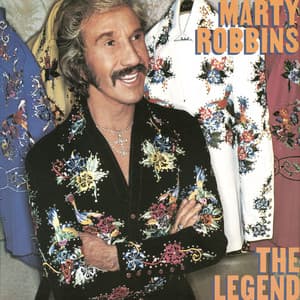
A timeless meditation on hope illuminated through the velvet phrasing of a Western icon
When Marty Robbins folded On the Sunny Side of the Street into his 1962 collection Marty After Midnight, he brought one of the great American standards into a new sphere of emotional resonance. The album itself marked a distinctive pivot in Robbins’s catalog, presenting a suite of late night interpretations shaped by soft orchestration and polished vocal warmth. Although the song was not issued as a charting single, its presence within the album signaled Robbins’s deepening commitment to bridging country, pop, and classic songwriting traditions. Originally introduced in 1930 by the songwriting team of Jimmy McHugh and Dorothy Fields, the piece had already traveled through jazz clubs and radio waves for decades. Yet in Robbins’s hands it acquired a new contour shaped by his instinct for storytelling and his uniquely contemplative vocal style.
The enduring vitality of On the Sunny Side of the Street rests in its elegance and simplicity. Robbins approached the lyric as if it were a personal reflection rather than a theatrical proclamation, reshaping the song into a private moment of awakening. His phrasing glides with a quiet steadiness that reflects the heart of the lyric: a gentle turning away from shadow toward a warmer horizon. Where earlier interpretations by swing bandleaders leaned on rhythmic brightness, Robbins opted for a slower, more introspective cadence. This choice reframed the song as an interior journey, transforming a classic expression of optimism into a meditation on resilience and emotional clarity.
The orchestration on Marty After Midnight provides a luminous backdrop. Strings and subdued brass surround Robbins with a halo of nocturnal sophistication while leaving enough space for his voice to guide the emotional center of the piece. The arrangement encourages listeners to hear the lyric not as a cheerful slogan but as a wiser, more lived-in philosophy that acknowledges the cost of walking through darkness before finding light again. Robbins’s vocal shading suggests a man who understands that hope is rarely instantaneous; it is earned slowly, step by step, with each choice to keep moving forward.
Much of the song’s cultural power lies in its adaptability. It has been interpreted as jazz, swing, pop, and big band music for generations. Robbins introduced yet another inflection by drawing upon his background as a narrative balladeer. His reading carries the intimacy of a man speaking quietly to himself after a long night, a voice that continues to echo long after the final note fades. His version reinforces the timeless lesson embedded in the lyric: the road toward the sunny side is always open, even for those who have wandered through heavy shadows.