
A VOICE WRAPPED IN LONELINESS AND LONGING
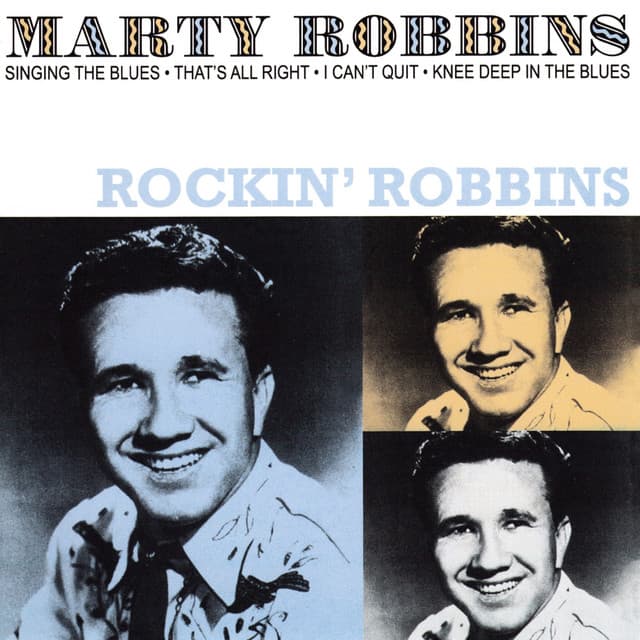
In “PAIN AND MISERY,” Marty Robbins offers a stark portrait of heartbreak so naked and unguarded that it lingers long after the final chord. The song appears on the compilation The Essential Marty Robbins 1951-1982 — a posthumous gathering of Robbins’s earliest and most haunting works.
The record does not boast hit-single status in the conventional sense. It is instead a deep-cut gem — a track that never soared to the top of the charts but nonetheless secured a quiet immortality among devoted listeners and country purists alike.
Where the pain lives
“PAIN AND MISERY” refuses any embellishment. From the opening moments, Marty Robbins’s voice carries the weight of empty mornings. The first verse paints the scene with crushing simplicity: at dawn, a man returns home to darkness, only to discover the woman he loved has left — no goodbye, no warning, nothing but an empty bed and a note he cannot even decipher.
His sorrow is not driven by dramatic betrayal or violent rupture, but by the quiet disappearance of love — the ghost of companionship lingering in every empty chair and half-lit room. Robbins doesn’t mythologize the moment. He doesn’t search for catharsis in barroom fights or wandering highways. Instead he offers the truth of heartbreak’s ordinary cruelty: loss that doesn’t make noise, leaves no trail, but settles like dust on a soul.
The simplicity of the instrumentation — classic country rhythm, plaintive steel guitar, minimal adornment — amplifies the rawness. There is no distraction from the sorrow. No sweeping strings. No dramatic crescendos. Just a man’s voice, his guitar, and grief so plain it trembles through each line. Though we cannot confirm precisely when the song was first recorded — some sources suggest a mid-1950s origin, possibly under the title Mean Mama Blues in one of its earlier forms.
The power of the ordinary
That grounded simplicity is where the song’s power lies. Robbins does not wrap heartbreak in Western myth or cowboy bravado. He makes grief domestic. The sorrow in “PAIN AND MISERY” is not the grand kind that belongs in outlaw ballads or tragic duets — it is the humble, gut-wrenching loss of someone who was supposed to be always there.
Listening to the song, you sense the emptiness not as drama, but as truth. The repeated lines, “nobody knows my sorrow, nobody knows my misery,” become a haunting confession, not a performance. It becomes less about one man’s lost love and more about the universal ache of abandonment — the nameless, faceless pain that comes when someone vanishes and the world keeps spinning regardless.
A quiet piece of legacy
Though “PAIN AND MISERY” never became a chart-topping hit, its endurance lies in its stark honesty and emotional clarity. It stands as a testament to Marty Robbins’s craft beyond the flamboyance of Western ballads and pop-crossover hits. Some songs win by numbers on the charts. This one endures by winning the quieter war: by speaking for the brokenhearted, by giving voice to sorrow, by refusing to glamorize pain.
In its modest length and modest instrumentation, “PAIN AND MISERY” holds a roomful of grief. And every time it plays, Robbins invites the listener to sit in that room, feel the silence, remember what it is to lose someone who once made a house a home.