
A Love Remembered Through the Tears of Time
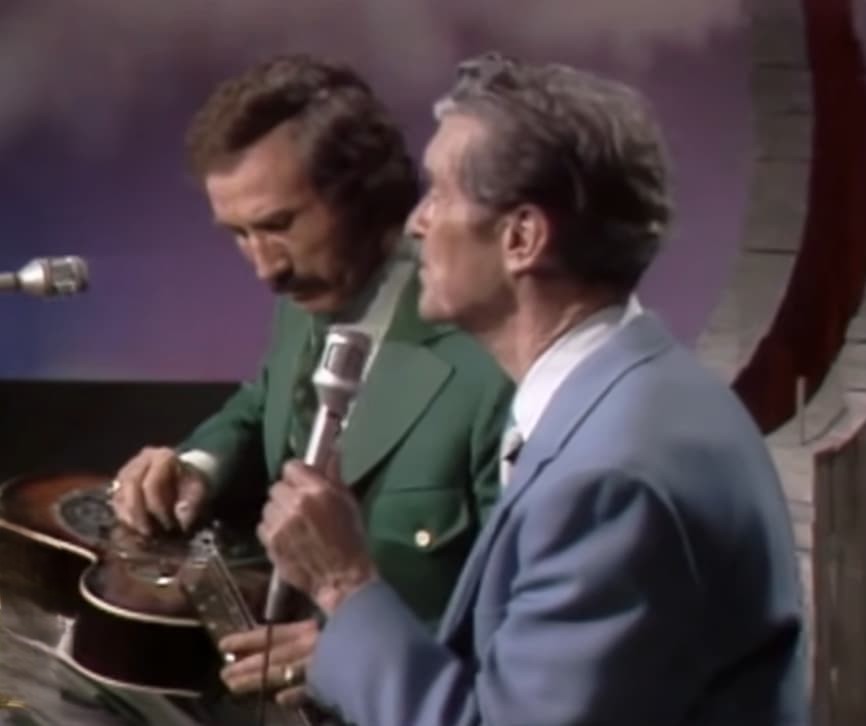
Among the many interpretations of “Blue Eyes Crying in the Rain,” the version recorded by Marty Robbins and Roy Acuff stands as a poignant meeting of two generations of country music artistry, bringing renewed life to one of the genre’s most enduring songs. Originally written by the legendary songwriter Fred Rose, the song had already become a cherished standard long before Robbins and Acuff lent their voices to it. Their rendition appeared on Marty Robbins & Roy Acuff: Country Music Time, a collaboration that celebrated the roots and traditions of country music while introducing timeless material to a new audience. Though not remembered primarily as a major chart phenomenon in comparison to some of Robbins’ biggest hits, the recording endures because of its emotional authenticity and the profound simplicity at its core.
What makes “Blue Eyes Crying in the Rain” so enduring is its remarkable restraint. Unlike many country ballads that rely on dramatic storytelling or elaborate emotional turns, this song unfolds with the quiet dignity of memory itself. The narrative is deceptively simple: two lovers part beneath a rainy sky, and years later the narrator reflects upon the loss, carrying the image of those tear-filled blue eyes through a lifetime of longing. Yet within that simplicity lies an emotional landscape vast enough to encompass grief, devotion, regret, and ultimately the hope of reunion beyond earthly existence.
In the hands of Marty Robbins and Roy Acuff, the song becomes more than a tale of romantic separation. It feels like a conversation between past and present, between memory and mortality. Robbins’ smooth, expressive delivery blends beautifully with Acuff’s weathered sincerity, creating a performance that mirrors the song’s themes. One voice carries the elegance of reflection; the other bears the weight of experience. Together, they transform the lyric into something deeply human—a meditation on the way certain moments remain frozen in time long after everything else has changed.
The imagery of rain has always occupied a special place in country music, often symbolizing sorrow, cleansing, or the passage of time. Here, the rain serves as both setting and metaphor. It obscures the future even as it preserves the final memory of a love slipping away. The tears in those blue eyes become inseparable from the rain itself, blurring the boundary between the natural world and human emotion. It is a songwriter’s masterstroke: a single image powerful enough to carry the entire emotional burden of the song.
Decades after its creation, “Blue Eyes Crying in the Rain” remains a testament to the enduring power of country music’s storytelling tradition. The recording by Marty Robbins and Roy Acuff reminds listeners that the deepest songs are often the quietest ones. It speaks to anyone who has carried a memory across the years, holding onto a face, a moment, or a farewell that never truly faded. In its gentle melancholy and unwavering grace, the song captures one of life’s most universal truths: some loves may be lost to time, but they are never lost to the heart.