
A Timeless Duel Between Honor and Age
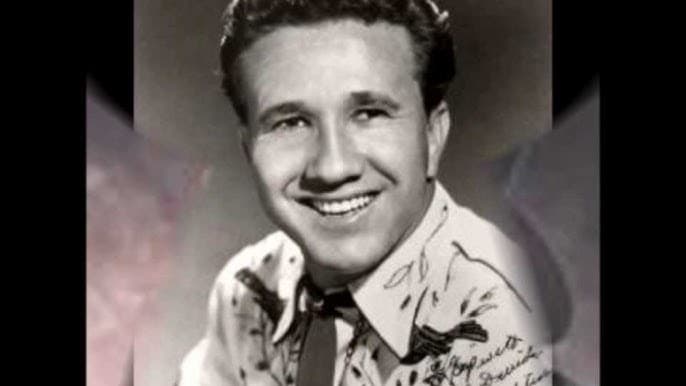
“The Ballad of Bill Thaxton”, sung by Marty Robbins, appears on his 1976 album El Paso City, and though it didn’t become one of his signature chart-topping hits, it endures as a richly drawn story-song that distills Robbins’s gift for Western myth-making and emotional depth.
Robbins recorded the track for his El Paso City LP, which was produced by Billy Sherrill and released on Columbia Records. While “The Ballad of Bill Thaxton” may not have broken into the highest echelons of the pop charts, its resonance lies more in its narrative power than in commercial metrics. There’s limited evidence of it reaching major chart milestones, but it remains a favorite among fans of Robbins’s Western ballads for its cinematic scope and moral gravity.
At its heart, The Ballad of Bill Thaxton tells the story of an aging, blind ranger named Bill Thaxton — a once-feared lawman now past his prime but still carrying the weight of legend. According to the lyrics, Thaxton was famed for his speed, his courage, and his ability to “pin on a ranger’s star.” But in the twilight of his years, a sinister figure rides into town: a young, flamboyant outlaw who calls himself Sundown, dressed in dark clothes and a black leather vest, and who insists on meeting Thaxton in a duel only “just as the sun’s going down.”
The tension builds in Robbins’s narrative with a classical Western showdown — a standoff as the sky glows like fire. Thaxton, despite his blindness, strides forward; Sundown waits, taunting, certain of victory. But Robbins gives us a twist: Thaxton is unfazed by the sun, not because he fears nothing, but because he cannot see — his blindness becomes a metaphorical strength, a sign that his courage does not depend on sight. When the six guns speak, only Thaxton’s revolver answers — six shots, no reply from Sundown. Thaxton stands over his fallen foe, a bittersweet victory that reaffirms his status as “the best of them all.”
Musically, the song moves at a steady, deliberate pace, with a tempo around 92 BPM in the key of C. That tempo gives Robbins room to inhabit the role of Thaxton — not the young hotshot, but a weathered man whose power lies not in speed, but in discipline and integrity. The arrangement, typical of Robbins’s mid-70s sound, supports the vocals in a way that feels intimate yet cinematic, never overshadowing the story.
What makes “The Ballad of Bill Thaxton” especially compelling is its meditation on time and courage. Robbins doesn’t just tell us a gunfight — he asks us to imagine what happens when legends grow old, when physical strength wanes, and when reputation becomes both burden and shield. Thaxton’s blindness is not weakness, but a testament to his resolve. His refusal to run, even in old age, and his ability to face a younger, cocky challenger on equal terms speaks of a deeper moral code: one where honor matters more than life.
In the broader tapestry of Robbins’s work — alongside classics like El Paso and Big Iron — this ballad stands as a quieter but no less powerful piece. It’s a story song steeped in nostalgia for a vanishing Western world, evoking the mythic frontier with compassion rather than romanticism. Thaxton is more than a gunslinger — he is the embodiment of a fading era, a man whose greatest duel is not just across a dusty street, but with his own legacy.
For listeners attuned to Robbins’s deep baritone and his gift for Western storytelling, “The Ballad of Bill Thaxton” remains a haunting reminder that heroism is not always about youth, but about the courage to face one’s final sunset with steady hands and a steady heart.