
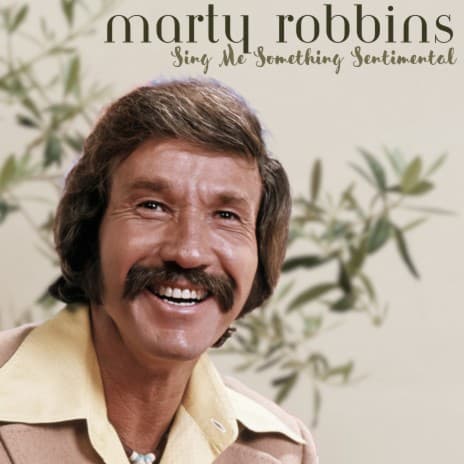
A Reckoning of Heartbreak and Consequence in Country Music
Your Heart’s Turn to Break by Marty Robbins stands in the quieter corners of his early catalog as a stark and unforgiving portrait of love lost and personal accountability. Released in the mid-1950s as the flip side to Pretty Words on Columbia/Philips Records, the song was part of a string of Robbins recordings from this period that found modest attention on country singles listings without reaching the heights of his later landmark hits such as El Paso or Don’t Worry Bout Me. In 1954 Pretty Words charted at number 12, backed by Your Heart’s Turn to Break on its reverse, and in doing so ensured that this haunting meditation on heartbreak was heard by listeners across jukeboxes and radio waves in the United States.
In context the song emerges from the earliest formative years of Robbins’s recording career, a time when he was still shaping his artistic identity through compositions that married classic country themes with an unmistakable personal voice. Robbins wrote and recorded the piece with a simplicity and directness that belied its emotional depth, embedding it among a catalogue of early works that chronicled the full spectrum of love and loss. While Your Heart’s Turn to Break did not become one of his enduring chart toppers, its inclusion in retrospective compilations and box sets dedicated to his early years has helped preserve it for discerning listeners who seek the undercurrents in Robbins’s development as a songwriter.
Lyrically the song reads as both confession and judgment. Robbins crafts a narrative addressed to a protagonist who has squandered love through indifference and attempts to mold his partner into an idealized version of himself. The imagery of waking “to face a cold gray dawn” and “laying there all alone and weep” underscores a bleak emotional landscape where love has been lost not through betrayal alone but through a failure to see and accept the beloved as she truly was. In the repeated refrain that “it’s your heart’s turn to break,” Robbins enacts a reversal of fortunes where the consequences of emotional neglect and self-absorption finally come home to roost.
Musically the song adheres to the traditions of early country balladry. The arrangement, typically sparse in Robbins’s early recordings, allows the narrative to dominate, with chord progressions that underline the lament without distracting from the story. There is a palpable sense of space in the composition, as if the very silence between the notes echoes the loneliness of the song’s subject. This stylistic restraint was a hallmark of Robbins’s early work and speaks to his confidence as a storyteller.
Critically the song can be read as a meditation on responsibility in relationships, a theme that would recur throughout Robbins’s career. Unlike some country compositions that externalize blame, Your Heart’s Turn to Break turns the gaze inward, insisting that the sufferer confront the role he has played in his own downfall. This introspection distinguishes the song from more conventional heartbreak narratives of its era and aligns it with a lineage of country music that treats love and loss as moral as well as emotional experiences.
Over time the song has resonated with aficionados who appreciate Robbins’s ability to convey complex affective states with unadorned clarity. It is not a crowd-pleasing anthem but a sobering reflection on the cost of emotional negligence. Within the broader tapestry of Robbins’s oeuvre, Your Heart’s Turn to Break stands as an early testament to his narrative prowess and his understanding of the deeper currents beneath the surface of classic country heartbreak.