
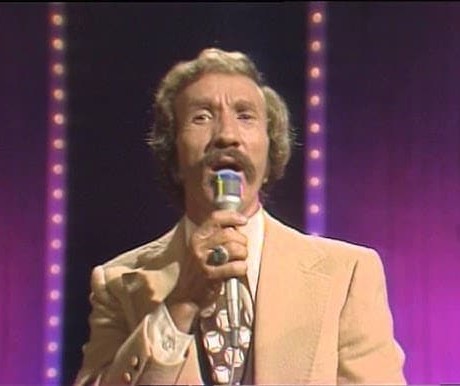
You’re Not The Only One is a confession of shared heartbreak tenderly borne in the voice of an artist who knew sorrow as a companion
In the mid-1960s, long after Marty Robbins had already become one of country music’s most versatile storytellers — a man whose catalog spanned the whip-crack tales of Gunfighter Ballads and Trail Songs to the tear-dampened verses of El Paso — he recorded “You’re Not The Only One” for the album Turn the Lights Down Low (released 1965). Though it wasn’t positioned among Robbins’ major chart hits or spotlighted as a flagship single, its enduring presence within his recorded output attests to the depth of emotional terrain he could explore even when not pursuing commercial accolades.
In the opening lines of “You’re Not The Only One,” Robbins adopts the weary candor of someone speaking to a companion of shared misfortune. The narrator’s voice carries that distinctive Robbins warmth — husky yet honest — as he poses those small, dreadful questions that echo in the quiet hours after love falters: “Has the wondering started? Is she bein’ untrue? Has the lovelight departed?” These rhetorical queries are not mere lyrical devices; they gesture toward a universal ache, the gnawing self-examination that precedes acceptance. Robbins isn’t preaching consolation. He’s offering communion.
What makes the song resonate is the way it reframes personal loss as collective experience. The refrain — “You’re not the only one / It happened to me” — is a gentle yet haunting admission that heartbreak is not an isolated calamity but a shared human passage. The simple repetition of these lines both soothes and stirs: it comforts by uniting the listener with the singer’s own bruised memory, and it unsettles by refusing to sentimentalize pain. In Robbins’ hands, empathy is never syrupy; it is candid and unadorned.
Structurally, the song is straightforward, almost austere: verses that unfold like confessions, an unembellished chorus that circles back upon itself, and an absence of grand musical flourishes. This restraint is part of its power. The nakedness of the arrangement places Robbins’ voice — its timbre worn but unwavering — at the center. In a genre often comfortable with dramatized heartbreak, “You’re Not The Only One” is remarkable for its quietude. It doesn’t dramatize suffering; it reflects it.
Lyrically, the imagery is equally evocative. Promises “wilting like leaves on a tree” paint heartbreak as a seasonal decay — inevitable, organic, and almost natural in its progression. Robbins’ choice of metaphor situates emotional loss within the larger cycle of life, reminding the listener that just as the trees shed their leaves, so too do hearts shed hope. In doing so, he places personal heartbreak within something much older and more universal: the rhythm of nature itself.
Though “You’re Not The Only One” may not headline Robbins’ legacy in the way El Paso or Big Iron do, it occupies an essential corner of his oeuvre — one where vulnerability and insight meet. It stands as a testament to a seasoned artist capable of translating the ache of solitude into a shared human story, and in its soft confession we find not merely consolation but connection.