
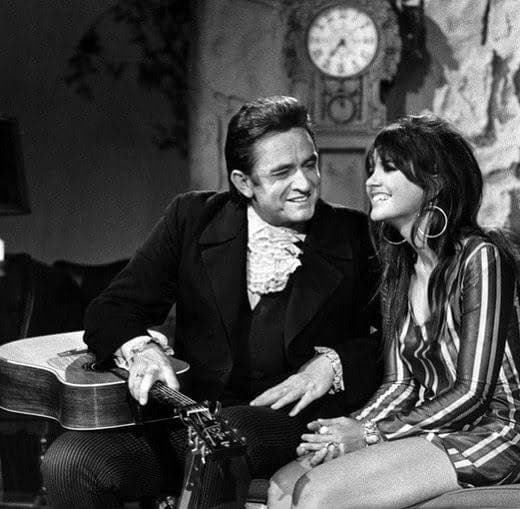
A confession of unreturned devotion where love endures not because it is rewarded, but because the heart has no other choice.
When Linda Ronstadt released “Long Long Time” in 1970, the song quietly but decisively marked her arrival as a major interpretive voice in American popular music. Issued as a single from her breakthrough album Silk Purse, it climbed to No. 25 on the Billboard Hot 100, a modest chart showing by pop standards, yet one that understated its long reach and lasting gravity. Written by Gary White and performed by Ronstadt with devastating restraint, the song became one of her earliest signature recordings. Its later performance on The Johnny Cash Show placed it in a rare space where pop vulnerability met country tradition, exposing the song’s emotional core to a national television audience that understood heartbreak not as spectacle, but as truth.
At its heart, “Long Long Time” is a study in emotional endurance. Unlike the dramatic arcs common to love songs of its era, there is no rupture here, no betrayal, no explosive goodbye. The song unfolds instead as an interior monologue, shaped by acceptance rather than hope. The narrator knows the love will never be returned. That knowledge is not discovered. It is lived with. What makes the song extraordinary is not sorrow alone, but the calm with which sorrow is carried. Ronstadt does not plead. She does not accuse. She simply stays.
Musically, the arrangement mirrors this emotional stasis. The gentle acoustic guitar, the restrained orchestration, and the unhurried tempo all serve the same purpose. Nothing pushes forward because nothing changes. Ronstadt’s vocal performance is the axis on which everything turns. She sings with clarity and control, yet there is a fragility beneath every sustained note, especially as the melody rises toward the chorus. When she reaches the line that names the song, it does not arrive as a climax. It arrives as a truth that has already been accepted.
The performance on The Johnny Cash Show deepened the song’s resonance. Cash’s program was known for its respect toward emotional authenticity, and Ronstadt’s appearance fit that ethos perfectly. Standing before a quiet audience, without studio gloss or protective distance, she delivered the song with the same composure found on the record. If anything, the televised setting sharpened the intimacy. The camera caught the stillness in her posture, the restraint in her expression. This was not a singer performing pain. This was someone inhabiting it.
Over time, “Long Long Time” has grown in stature precisely because it resists resolution. It does not promise healing. It does not suggest that time will erase the wound. Instead, it honors a form of love rarely dignified in song. Love that persists without reward. Love that becomes part of one’s emotional landscape, as permanent as memory itself. In the arc of Linda Ronstadt’s career, the song stands as an early declaration of what she would do better than almost anyone else. She did not just sing beautifully. She listened to the song until it revealed its quietest truth, then delivered it without disguise.