
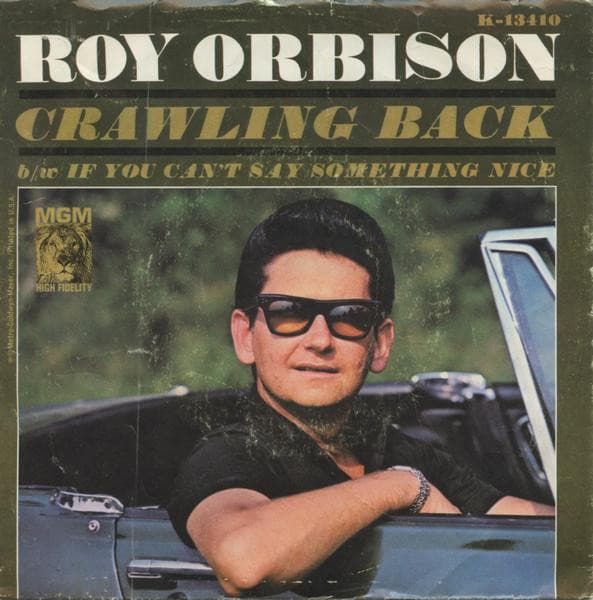
A quiet reckoning of heartbreak unfolds in a voice that refuses to let despair silence its truth.
When Roy Orbison released Crawling Back in 1965 as part of the album There Is Only One Roy Orbison, the single marked another compelling entry in the artist’s ascent during a transformative era of popular music. The song reached number 46 on the Billboard Hot 100 in the United States and achieved a stronger reception in the United Kingdom, where it climbed to number 8. These chart positions placed the track among Orbison’s notable mid-sixties works and reinforced his reputation as a singular vocalist whose emotional expression stood apart from his contemporaries. Yet Crawling Back is remembered not for its commercial performance but for its haunting introspection and the distilled emotional intelligence that Orbison brought to the studio.
The essence of Crawling Back resides in its architecture of vulnerability. Orbison was a master at shaping emotional tension. Rather than relying on the dramatic crescendos that defined some of his earlier classics, he crafted a more measured descent into the painful recognition of longing. The song opens with a tone of resignation, and the arrangement immediately sets the listener within a space of quiet reckoning. Strings move slowly, almost tentatively, while the rhythm section follows a restrained cadence that mirrors the narrator’s unsteady emotional footing. Orbison’s vocal delivery remains the central force. His timbre is warm but shadowed, allowing each line to unfold with an honesty that feels both confessional and universal.
The lyrics examine the cycle of return that often defines heartbreak. There is no triumphant plea, no dramatic confrontation. Instead, the song’s narrator acknowledges the inevitability of coming back to a love that has already caused pain. Orbison captures the emotional inertia that keeps individuals tethered to past attachments. The construction of the lyric is unembellished, but its simplicity becomes a vessel for profound meaning. Lines that speak of returning with lowered pride illustrate not weakness but an intimate admission of human frailty. This interior perspective aligns with Orbison’s broader artistic legacy. He consistently illuminated the complexities of emotion rather than reducing them to clear, triumphant resolutions.
The musical composition adds depth to the narrative. The orchestral arrangement does not overwhelm; it rises gently behind Orbison’s voice, offering texture rather than spectacle. This balance reflects a careful consideration of how to portray internal struggle through sound. The song feels suspended between confession and resignation, with each measure reinforcing the emotional weight carried by the narrator. Orbison’s phrasing guides the listener through this delicate terrain, providing a sense of empathy that transcends the track’s era.
Culturally, Crawling Back occupies an important place in Orbison’s catalog. It demonstrates his unmatched ability to articulate sorrow with dignity and nuance. It also stands as an example of how his work influenced later generations of vocalists who sought to convey emotional depth without relying on theatricality. The song remains a testament to Orbison’s artistic integrity, offering a timeless reflection on longing, humility, and the persistence of love even when it falters.