
A LOVE THAT STAYS FRESH THROUGH EVERY SEASON
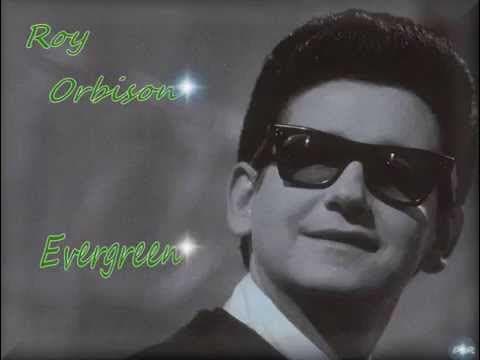
“Evergreen” is one of Roy Orbison’s most tender and enduring ballads, first released in 1962 by the enigmatic voice often called “the Big O.”
Although not one of his chart-topping hits, “Evergreen” holds a quiet but precious place in his catalog. It debuted on Roy Orbison’s Greatest Hits, a compilation released in August 1962 by Monument Records. Unlike his blockbuster singles such as “Only the Lonely” or “Running Scared,” this song never made a major splash in the charts. Indeed, there’s little evidence of a conventionally high chart position; it appears to have been more of a fan favorite, a soft jewel that shimmered in the margins of his discography.
Composed by Joe Tanner, with production led by Fred Foster, “Evergreen” was first recorded by Orbison on January 9, 1962. Its inclusion on the greatest hits album—rather than a standard studio LP—speaks to the way it was regarded: not a radio-filling, ear-catching single, but a heartfelt gem confined to the deeper grooves of his work.
The Timelessness of “Evergreen”
From the very first line—“Sometimes love will bloom in the springtime / Then like flowers in summer it will grow”—the song unfolds as an elegant meditation on the nature of lasting love. Orbison’s voice, gentle and yearning, brings a deep sincerity to the promise that true love, when evergreen, will endure not only the warmth of summer but also the bitter winds of winter.
This isn’t a declaration of fair-weather romance. It is rather a solemn affirmation: when love is genuine, it persists through change, through laughter and tears, through seasons of joy and hardship. The repeated use of “evergreen” functions not just as a metaphor but as a motif: something alive yet unchanging, growing yet grounded. That duality—growth and permanence—is central to the song’s emotional core.
Musically, the arrangement is spare and intimate. Orbison’s vocal sits lightly on a gentle accompaniment that feels more like a lullaby than a dramatic rock ballad. It’s not the operatic intensity often associated with Orbison’s biggest hits; here, he reigns back, offering a tender warmth instead of soaring bravado. The production choices give space for the lyrics to breathe—to feel like a whispered vow, not a grand proclamation.
That simplicity holds quiet power. In an era when love songs could be bombastic or melodramatic, “Evergreen” stands out for its restraint and its sincerity. It’s as though Orbison is speaking directly to someone he deeply trusts, promising that his love will not wilt or fade, no matter what seasons come.
Legacy and Reflection
While “Evergreen” may not have climbed the pop charts, its legacy endures among Orbison’s most devoted listeners. It reflects a side of him that is less about theatrical affecting voice and more about the intimate, vulnerable heart of a man who believed in enduring, unfading love.
Interestingly, according to live-performance records, Orbison performed “Evergreen” only a handful of times—in concert for the first time in 1964, and sporadically thereafter. That rarity only deepens its mystique: a song not overplayed, not overexposed, preserved like a secret promise.
In the broader context of his career, “Evergreen” illustrates why Roy Orbison was more than just a voice — he was a storyteller of the heart’s deeper seasons. At a time when love songs often celebrated fleeting attractions or dramatic heartbreak, this track speaks of endurance, of a love that survives and remains lush in memory. It’s a quiet testament to the idea that true love doesn’t just burn—it remains green.
In revisiting Evergreen, we hear not just a classic singer, but a quietly wise poet: a man who understood that some things, when real, don’t just shine for a moment—they endure.