
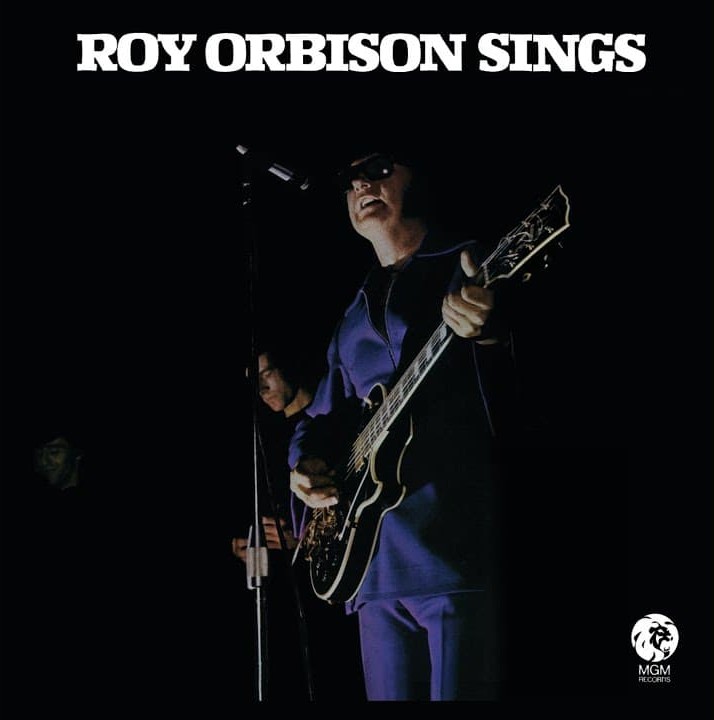
A wounded benediction where love is offered not as comfort, but as a final act of grace.
Released during a turbulent late phase of his imperial decade, God Love You by Roy Orbison arrived in 1966 as part of the album Cry Softly Lonely One, a record that reflected an artist standing at a crossroads between past glory and an uncertain future. Issued as a single, the song achieved only modest chart visibility upon release, especially when compared with Orbison’s towering early sixties triumphs, yet its emotional weight far exceeded its commercial footprint. Today, particularly in its 2015 remastered form, the song reads less like a forgotten single and more like a private confession preserved on tape.
By the mid sixties, Roy Orbison was no longer the untouchable hitmaker of Only the Lonely or Crying. Musical tastes were shifting, the British Invasion had redrawn the pop landscape, and Orbison’s intensely inward emotional style was beginning to feel out of step with an increasingly loud and ironic era. God Love You belongs squarely to this moment of quiet resistance. Rather than chasing trends, Orbison retreated further inward, offering a song built not on melodic fireworks, but on moral gravity and emotional restraint.
Lyrically, God Love You is one of Orbison’s most unsparing compositions. There is no romantic triumph here, no operatic catharsis. Instead, the song unfolds as a measured address to someone who has caused deep harm, perhaps without ever fully realizing it. The title phrase itself is not a blessing delivered with warmth, but a phrase edged with resignation. In Orbison’s hands, “God love you” becomes what remains when human forgiveness has reached its limit. It is the sound of a man laying down judgment not through anger, but through distance.
Musically, the arrangement mirrors this emotional austerity. The instrumentation is restrained, almost severe, allowing Orbison’s voice to carry the full moral burden of the song. His phrasing is deliberate, his vibrato controlled, his famous upper register held in reserve. This restraint is crucial. Where earlier Orbison recordings soared toward the heavens, God Love You stays grounded, its power drawn from understatement rather than release. The effect is quietly devastating.
What gives God Love You its lasting resonance is how it reframes Orbison’s recurring themes of heartbreak and isolation. This is not the agony of sudden loss, but the exhaustion that follows prolonged emotional damage. It is the voice of someone who has already survived the worst and is now speaking from the other side, colder, clearer, and irrevocably changed.
In retrospect, the song stands as a pivotal emotional document within Roy Orbison’s catalog. It captures an artist learning to live without the certainty of applause, refining his emotional language into something leaner and more severe. God Love You may never have dominated the charts, but it endures as one of Orbison’s most mature statements, a reminder that some of the deepest truths in popular music arrive not in moments of triumph, but in quiet reckonings whispered into the dark.