
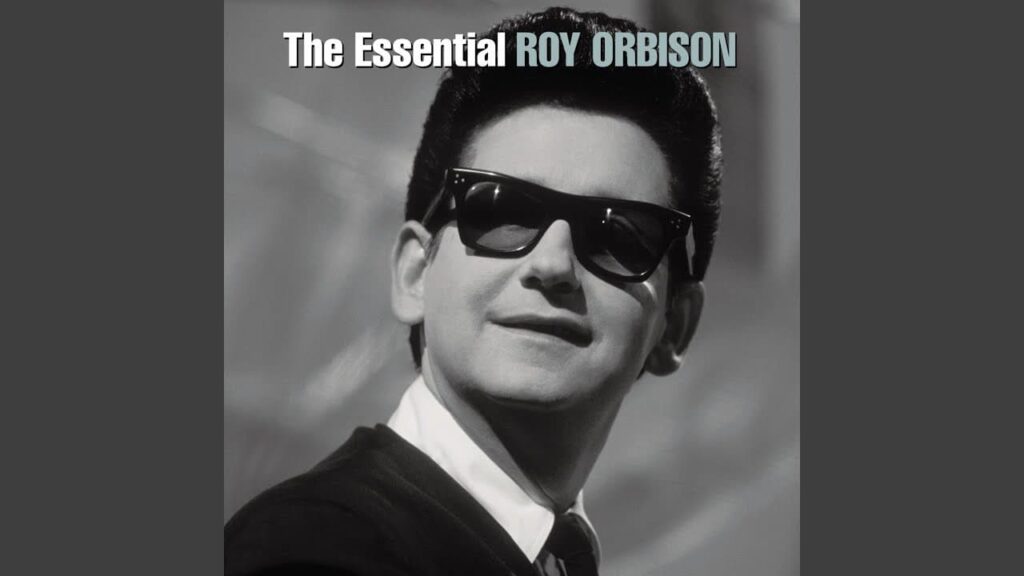
A Fortress of Heartbreak: The Big O’s Solitary Refuge
Do you remember those moments in the early 1960s, when the world seemed to be turning faster, full of new sounds and electric energy, yet one man stood on stage, motionless in his signature dark glasses, singing songs that felt as ancient and profound as human sorrow itself? That man was Roy Orbison, and his voice—oh, that voice—could shatter glass and a heart simultaneously. It soared, an impossible, operatic tenor that brought an unparalleled drama to the nascent rock and roll landscape.
This particular gem, “House Without Windows,” is a quintessential piece of that golden era of emotional balladry. Written by the talented duo Lee Pockriss and Fred Tobias, it was a song that resonated deeply with the Big O’s signature theme of devastating, unshakeable loss. The song was first recorded by Orbison in late 1961, though it was held back from being issued as a 45 single—a decision that remains a genuine puzzle to many critics and fans, given its sheer quality and emotional punch. Instead, it made its debut on the 1963 album, In Dreams. Unlike many of his more famous tracks that dominated the singles charts, “House Without Windows” never charted as a single for Roy Orbison, yet its inclusion on the album cemented its place as a profound, if lesser-known, masterpiece in his catalog.
The very concept behind “House Without Windows” is one of the most powerful metaphors in the entire lexicon of heartache. The song’s narrator is so completely broken by the departure of his love that he plans to retreat into a literal, physical fortress of solitude. He sings of finding a “house without windows” and “without a door,” a place so sealed off from the outside world that he can ensure he will “never hear the telephone ring” or “see you walking by.”
This isn’t just a tale of being sad; it’s a terrifying portrait of emotional paralysis and total avoidance. It speaks to that raw, post-breakup state where every passing street corner, every familiar sound, every glance at the phone threatens to tear open the freshly stitched wound of a goodbye. For an older generation, who remember a time when moving on didn’t involve deleting a digital presence but rather physically avoiding places and routines, this lyric taps into a visceral, tangible grief. The house isn’t just a place to live; it’s a self-imposed tomb where he can be safely shielded from the sight of his former love and the sound of hope or memory. It’s the ultimate retreat from the possibility of any further pain.
What elevates this track is, of course, Roy Orbison‘s delivery. Recorded with the legendary Nashville A-Team session musicians—including the unforgettable weeping strings and Anita Kerr’s uncredited, dramatic arrangements—the song is a masterclass in musical drama. The track ebbs and flows, building tension with its soft, melancholy verses before exploding into that iconic, soaring chorus. Orbison‘s voice effortlessly rides the wave of the orchestral surge, his tenor conveying a desolation that is both intimate and universal.
It’s a sound that brings you right back to a quieter, yet arguably more dramatic, time in popular music. It’s the sound of a man standing utterly alone against a world that has failed him, his only defense being the black curtain of his own isolation. Though other artists, including Gene Pitney and Cliff Richard, also recorded their own versions, it is Roy Orbison’s 1963 rendition that remains the definitive, most emotionally harrowing take—a song that turns a simple building into a vast, echoing chamber of a broken heart. It reminds us that sometimes, the only way to survive the light of a memory is to voluntarily move into the beautiful, yet terrifying, dark.