
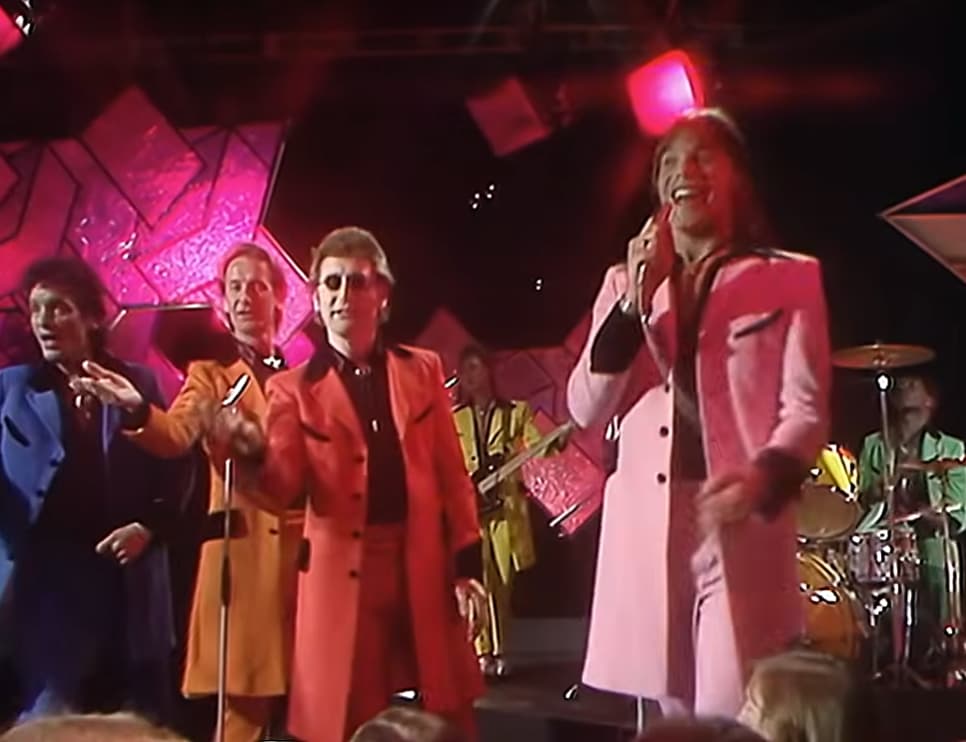
A Nostalgic Reverie Where Youthful Love Echoes Across the Years
When Showaddywaddy released “Remember Then” in the spring of 1979, the record became another notable entry in the group’s remarkable run of revival-era hits, climbing to No. 17 on the UK Singles Chart and remaining in the charts for eight weeks. Originally featured on the band’s Crepes & Drapes album, the song arrived at a fascinating moment in popular music history, when punk, new wave, and disco were reshaping the musical landscape. Yet Showaddywaddy, steadfast custodians of rock-and-roll nostalgia, continued to find an audience by celebrating the sounds and sentiments of an earlier era.
At its heart, “Remember Then” is a song about memory itself—the way love survives not only in photographs and keepsakes, but in the mind’s persistent longing to revisit moments that time has carried away. The song was not originally a Showaddywaddy composition; it first emerged in 1962 as a doo-wop classic recorded by The Earls, written by Tony Powers and Beverly Ross. By choosing to revive it nearly two decades later, Showaddywaddy were doing more than covering an old favorite. They were preserving a piece of musical history and reintroducing its emotional resonance to a new generation.
The genius of “Remember Then” lies in its simplicity. Unlike many love songs that dramatize heartbreak or celebrate romance in grand terms, this recording dwells in recollection. Its lyrics unfold like a conversation with the past, revisiting the innocence of young love through fragments of memory. The recurring refrain functions almost like a faded photograph repeatedly pulled from a drawer—familiar, cherished, and slightly softened by time. Each repetition deepens the song’s emotional pull, transforming remembrance into a ritual.
Musically, the record embodies everything that made classic doo-wop so enduring. The layered harmonies create a sense of community and shared experience, while the gentle rhythm evokes the atmosphere of school dances, summer evenings, and neighborhood street corners where countless teenage romances first blossomed. Showaddywaddy’s interpretation retains the warmth of the original while adding the polished confidence of a band that had spent years perfecting its celebration of 1950s and early-1960s rock-and-roll traditions.
What makes “Remember Then” especially poignant is the perspective from which many listeners encounter it. The song is no longer simply about young people in love; it becomes a reflection for those looking back across decades. The passage of time gives the lyrics an added layer of meaning. Every listener brings their own memories to the record—their own vanished summers, first romances, and youthful dreams. In that sense, the song transcends nostalgia and becomes something more universal: a meditation on how the past continues to shape who we are.
More than forty years after its chart success, “Remember Then” remains one of those recordings that captures an emotion difficult to express in words. It reminds us that while years pass and fashions change, certain feelings endure. Through its tender harmonies and wistful storytelling, Showaddywaddy created a bridge between generations, proving that the sweetest melodies are often the ones that help us remember who we once were.