
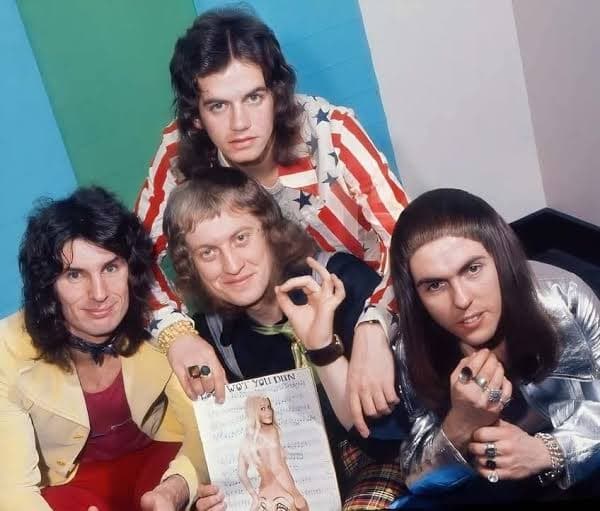
A heartbreak dressed in stomping boots and shouted through the smoke of early glam rock.
When Slade released “Look Wot You Dun” in January 1972, the group was standing on the edge of something larger than chart success. The single climbed to No. 4 on the UK Singles Chart and remained there for ten weeks, confirming that the Wolverhampton band were no passing novelty but one of Britain’s defining rock voices of the decade. Though originally issued as a standalone single rather than part of a contemporary studio album, the song would later become associated with collections such as “Sladest”, preserving its place in the band’s golden era. Produced by Chas Chandler, the record arrived at a moment when glam rock was becoming louder, rougher, and more streetwise — and “Look Wot You Dun” carried all of that energy with a bruised emotional center beneath the stomp.
What makes the song endure is the tension between its muscular sound and its wounded heart. Slade were masters of working-class theatricality: massive choruses, deliberate misspellings, pounding rhythms, and sing-along hooks built for crowded dance halls and cigarette-hazed clubs. But underneath the swagger of “Look Wot You Dun” lies something more vulnerable than many listeners first notice. The narrator is not triumphant. He is stunned. The title itself sounds accusatory, almost childlike in its disbelief — the voice of someone staring at the wreckage of a relationship and still trying to understand how quickly affection can turn into emotional ruin.
Noddy Holder’s vocal performance is central to that emotional contradiction. He does not sing with polished elegance; he pushes the words out with grit, urgency, and strain. In another band, the song might have become a straightforward blues lament. In Slade’s hands, it becomes a communal cry — pain transformed into something loud enough for an audience to shout back at the stage. That was one of the group’s great gifts. They understood that rock music did not always need sophistication to feel profound. Sometimes the rawness was the poetry.
Musically, the track sits at a fascinating crossroads in British rock history. The blues influence is unmistakable, yet the song also points directly toward the glam explosion that would soon dominate the decade. Dave Hill’s guitar work has weight without excess, while the rhythm section keeps the record moving with almost industrial force. The beat feels physical, like boots hitting wooden floors in unison. There is nothing delicate about the arrangement. Even the melody arrives with a kind of rough confidence, balancing sorrow with defiance.
Looking back now, “Look Wot You Dun” feels like an early blueprint for the emotional architecture of glam rock itself. Long before the genre became associated with glitter, spectacle, and flamboyance, songs like this revealed its true foundation: loneliness shouted loudly enough to sound like celebration. Slade captured ordinary heartbreak in the language of pub rock and street-corner realism, and they did it without pretension. That honesty is why the record still resonates more than fifty years later.
There are cleaner recordings from the era. There are technically finer vocalists. But few records from 1972 carry this same sense of lived-in humanity — the feeling that behind every pounding drumbeat is somebody trying not to fall apart.