
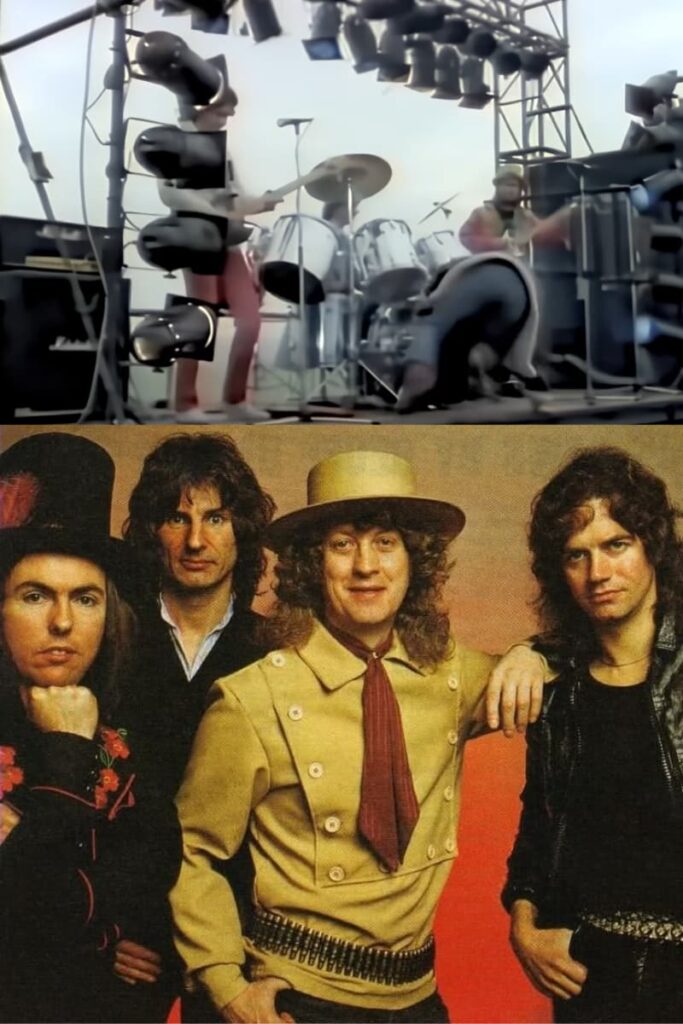
A Song That Turns Loneliness Into a Shared Human Anthem
When Slade released “My Oh My” in November 1983, few could have predicted that this reflective power ballad would become one of the band’s most beloved late-career triumphs. Taken from the album The Amazing Kamikaze Syndrome, the single climbed to No. 2 on the UK Singles Chart during the Christmas season of 1983, remaining there for three consecutive weeks and helping propel the album back into public consciousness during a remarkable revival period for the band.
What makes “My Oh My” so enduring is the striking contrast between its simplicity and its emotional weight. Written by Noddy Holder and Jim Lea, the song arrived at a crucial moment in Slade’s career. The band had spent years fighting to regain the commercial momentum that had made them one of Britain’s defining rock acts of the 1970s. In response to concerns that their upcoming album lacked a major hit, Holder and Lea composed two songs that would change the band’s fortunes: “My Oh My” and “Run Runaway.” Both proved instrumental in Slade’s resurgence.
Yet unlike the energetic stomp and folk-rock exuberance of “Run Runaway,” “My Oh My” travels a far more intimate road. The song begins almost as a confession, with piano-led restraint and a vocal performance that feels remarkably vulnerable. Then, gradually, it expands into something much larger. By the time the famous communal chorus arrives, the listener is no longer hearing the thoughts of one individual but the voice of a crowd united by shared experience.
The lyrical heart of the song lies in its gentle reassurance. It speaks to moments when life feels uncertain, when dreams appear distant, and when the weight of disappointment threatens to overwhelm hope. Rather than offering grand solutions, the song presents a simple truth: everyone faces hardship, and everyone searches for meaning. That universal perspective transforms personal struggle into collective strength.
Musically, “My Oh My” showcases Slade’s often-underappreciated craftsmanship. The arrangement is carefully constructed, moving from quiet reflection to soaring emotional release. The massive sing-along chorus became one of the song’s defining features, creating the feeling of a stadium full of voices joining together in solidarity. Critics at the time noted how effectively the melody carried the song’s emotional message, while the production added a broader, more accessible dimension to Slade’s signature sound.
More than four decades later, “My Oh My” remains a reminder that great rock music is not always about rebellion or spectacle. Sometimes its greatest power lies in comfort, empathy, and connection. In an era dominated by larger-than-life personalities and flamboyant performances, Slade created something unexpectedly timeless—a song that acknowledges life’s hardships while insisting that none of us face them alone.
That is why “My Oh My” continues to resonate long after its chart success faded from the headlines. It is not merely a comeback hit from Slade; it is a musical embrace, wrapped in melody, offered to anyone who has ever needed reassurance that brighter days still lie ahead.