
A Moment of Release and Reckoning
When the first chords of 4TH OF JULY strike, there is a jolt. It sounds like the firework flash and aftershock of a life briefly ablaze and then crashing in slow motion.
In 1976, the British glam-rock outfit The Sweet released 4TH OF JULY as part of their fourth studio album Give Us a Wink. The album marked a turning point for the band, being the first to be fully written and produced by the group themselves rather than outside songwriters. As for 4TH OF JULY, it was issued as a single only in Australia, where it appeared in 1976 — however it did not manage to chart.
Yet despite its modest commercial footprint, the song occupies a distinct space within The Sweet’s evolution: it stands among the pieces that marked their shift from the bubble-gum pop-glam that brought early hits toward a harder, more self-reliant rock identity.
The Fire Behind the Fade
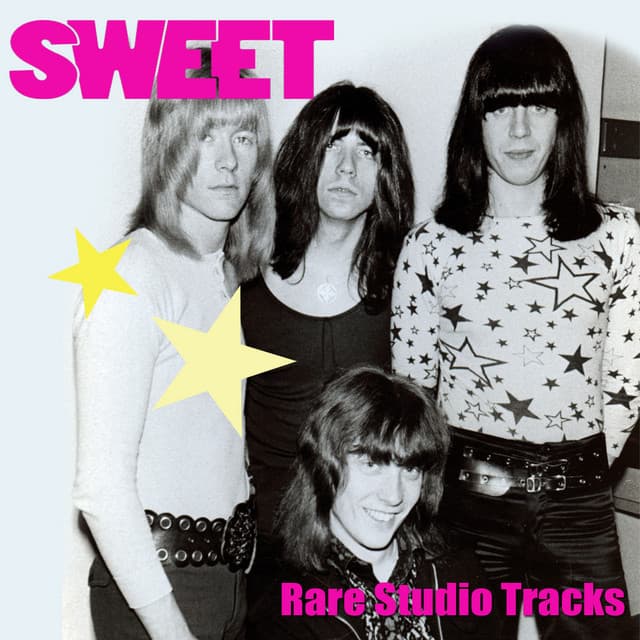
At the time of Give Us a Wink, The Sweet were consciously reorienting themselves. Their earlier fame had been built on catchy, outsider-written novelties. By 1976, the band — comprised of Brian Connolly, Steve Priest, Andy Scott, and Mick Tucker — asserted creative control. They began writing not just the occasional B-side but full tracks that reflected their own darker sensibilities and rock aspirations.
In that context, 4TH OF JULY assumes the tone of both a farewell to their lighter past and a test of their newfound ambition. The lyrics speak of confusion, self-deception, a dizzy desperation: “The fool got up and hit my face / I couldn’t make it to the door,” the song begins, plunging immediately into bruising disorientation. The refrain, “When the stars came down, I was higher than the 4th of July,” captures a moment of intoxicated escape — whether from heartbreak, regret, or a sense of chaos — followed by a descent, a crashing return, a longing for oblivion or release.
Musically, the track sits at the intersection of the glittery glam sheen and raw hard rock — a kind of transitional twilight. The arrangement, guitar-forward yet steeped in melancholic drive, underscores the lyrics’ unstable emotional arc: one minute soaring, the next staggering under weight. The song evokes that unique 1970s tension when glam ostentation scratched against hard-rock grit.
By embedding 4TH OF JULY within an album deliberately crafted by the band, The Sweet were asserting their maturity and agency. The song becomes less a radio-friendly single than a statement of identity, a hinge between their early pop success and their later rock gravitas.
Echoes Later Heard
Because 4TH OF JULY never enjoyed the commercial push or widespread airplay that made other Sweet songs instant classics, its shadow in rock history is subtle — but to those who seek it, it has a haunting resonance. It suggests the band’s internal conflict: between the glittering persona that made them famous and a deeper, grittier ambition for authenticity.
Listening now, the song feels almost prescient, as if the band sensed that their early success might not last, and were reaching for something real before the spotlight faded. The exhaustion in the narrator’s voice, the desperate intoxication beneath the fireworks metaphor — it all hints at a rock band trying to grow beyond the pop machine, wrestling with pain, identity, and the cost of their own choices.
In that 4-minute blaze, 4TH OF JULY stands as a fleeting conflagration: brilliant, dangerous, raw, and ultimately a turning point in the trajectory of The Sweet.