
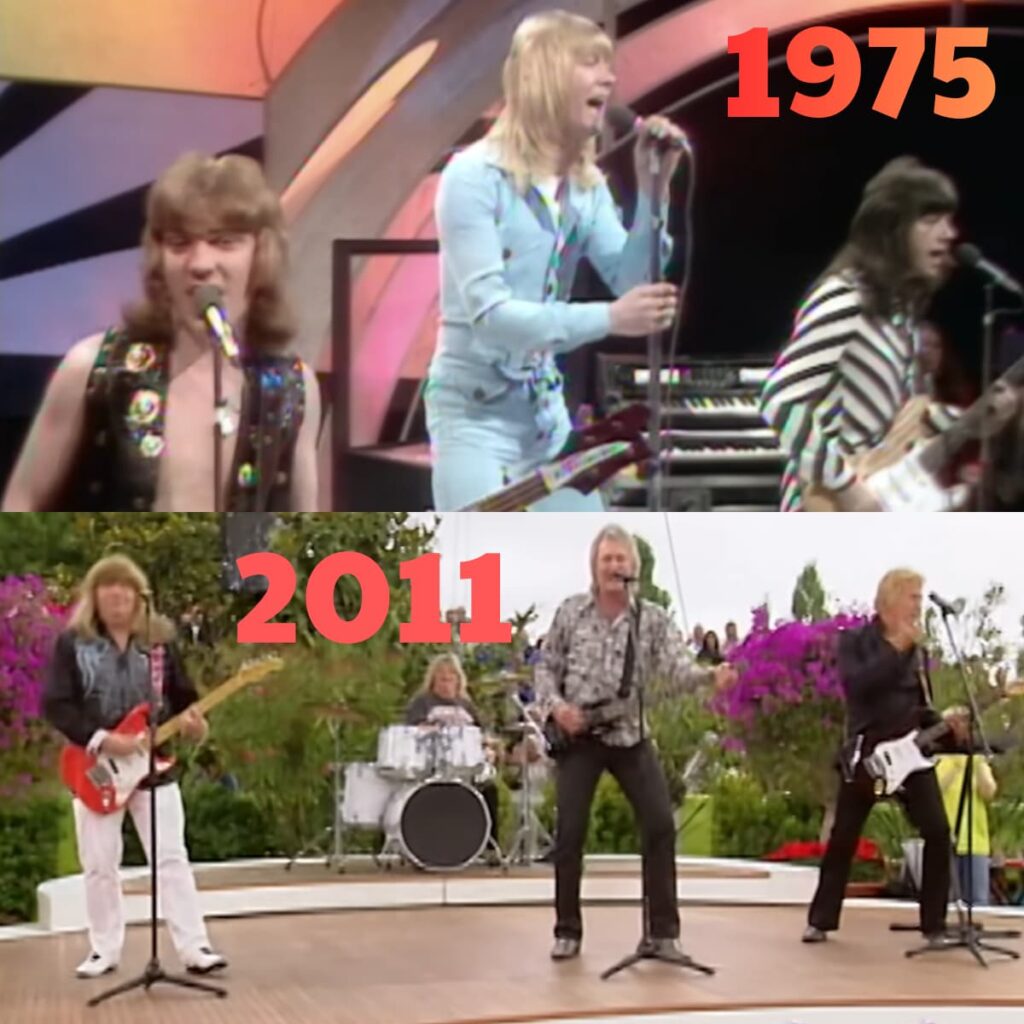
A glittering chase song that disguises vulnerability beneath swagger and speed.
Released in 1975, Fox on the Run stormed the charts as one of Sweet’s defining statements, climbing to number two on the UK Singles Chart and reaching the Top Five in the United States. It appeared on Give Us a Wink in the UK and Desolation Boulevard for the American market, cementing the band’s transition from bubblegum hitmakers into architects of a harder, more self aware glam rock sound. From its first radio spins, the song announced ambition, control, and a new authority in Sweet’s catalogue.
At its core, Fox on the Run is a song about pursuit and illusion, a sleek pop narrative wrapped in distortion and momentum. The lyrics sketch a woman who moves faster than expectation, elusive and self possessed, refusing to be owned or slowed. Rather than moral judgment, the song radiates fascination. She is not punished for her independence. She is admired for it. This subtle inversion matters. In an era when many pop narratives reduced women to trophies or cautionary tales, Sweet framed their subject as a force of nature, admired precisely because she remains out of reach.
Musically, the track represents a turning point. Built on a grinding, forward driving guitar riff and a muscular rhythm section, Fox on the Run discards the ornate sweetness of the band’s earlier singles. The production is leaner and more aggressive, yet still meticulously melodic. Layered harmonies glide over the grit, reminding the listener that Sweet never abandoned pop craftsmanship even as they embraced volume and bite. The tension between polish and power gives the song its lasting energy. It feels fast without rushing, confident without overstatement.
Lyrically, the song operates on two levels. On the surface, it is a glamorous chase through nightlife and desire. Beneath that, it reflects the shifting dynamics of the mid 1970s, when autonomy and image became currencies of survival. The fox is clever, stylish, and uncatchable, not because she hides, but because she chooses her own direction. The narrator is left in motion, not defeated, but changed by the pursuit itself. That emotional ambiguity is what elevates the song beyond novelty. It understands longing as something unresolved.
Decades later, performances like Sweet’s appearance at ZDF Fernsehgarten on 17.07.2011 reveal the song’s durability. The sheen of glam may age, but conviction does not. Played to a daytime television audience far removed from the clubs and charts of 1975, Fox on the Run still carries urgency. The chorus remains a communal release, its hook etched into collective memory. What survives is not just nostalgia, but recognition. The song captures a moment when pop learned to run faster, louder, and smarter, and never quite slowed down again.