
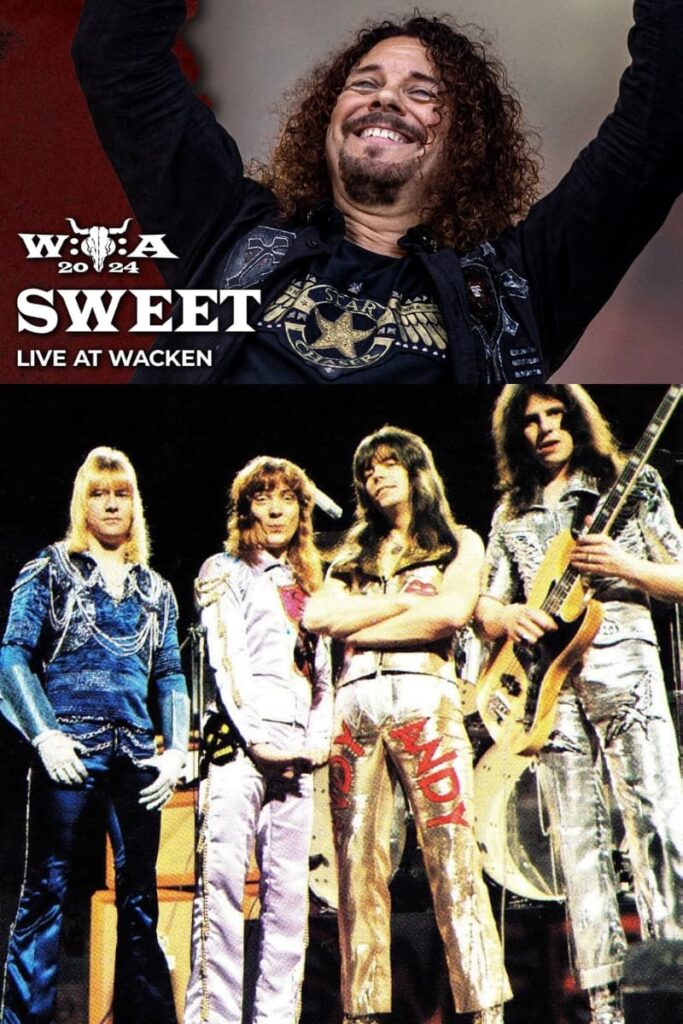
A band forged in glitter and thunder returning to the stage with the defiant spirit of survivors rather than relics
When Sweet appeared at Wacken Open Air 2024, they stepped onto one of the world’s most iconic festival stages carrying more than five decades of musical history behind them. Known originally for defining the flamboyant energy of 1970s glam rock through classics such as Ballroom Blitz, Fox on the Run, and Love Is Like Oxygen, the band’s presence at Wacken was not driven by chart ambitions or album promotion. It was something far more revealing. A demonstration of endurance. A reminder that certain forms of rock music are not confined to nostalgia, but continue to live through performance itself.
The significance of this appearance lies partly in contrast. Wacken Open Air, traditionally associated with heavier forms of rock and metal, might initially seem distant from the glitter-soaked theatricality that once defined Sweet. Yet the connection becomes obvious the moment the music begins. Beneath the glam aesthetics, Sweet always possessed a harder edge than they were often credited for. Their driving riffs, layered harmonies, and explosive rhythmic energy helped lay groundwork that many later hard rock and metal acts would expand upon. At Wacken, that lineage feels undeniable.
What makes the 2024 performance particularly compelling is the way it balances celebration with persistence. This is not a band attempting to recreate youth through illusion. Time is present in every aspect of the performance. In the voices, in the stage presence, in the atmosphere itself. Yet rather than weakening the impact, that passage of time adds weight to it. The songs no longer sound like fleeting pop phenomena. They sound like survivors.
Musically, the live setting amplifies the rawness embedded within Sweet’s catalog. Songs once polished for radio regain a sharper, more aggressive texture in front of a festival crowd. The guitars hit harder, the rhythms feel heavier, and the choruses carry the force of collective memory. Thousands of voices responding to songs written decades earlier transforms the performance into something larger than entertainment. It becomes communal recognition.
Vocally, there is an inevitable evolution. The pristine sharpness of the original recordings has softened with age, but what replaces it is authenticity. The performance no longer relies solely on precision. It relies on conviction. And conviction, particularly in rock music, often carries greater emotional truth than perfection ever could.
There is also something profoundly symbolic about Sweet performing at a festival like Wacken in 2024. Glam rock, once dismissed by some critics as superficial or transient, now stands revealed as foundational. The visual flamboyance may have defined its image, but underneath was a deep understanding of melody, performance, and emotional release. Many of the heavier genres celebrated at Wacken owe part of their theatrical confidence to bands like Sweet.
Within the broader arc of their career, this performance represents continuity rather than comeback. Sweet are not reclaiming relevance because the songs never fully disappeared. They persisted through generations, influencing artists and audiences far beyond the cultural moment that first produced them.
What lingers after the final chord fades is not simply nostalgia for the 1970s, but admiration for endurance itself. The realization that music built on genuine energy can survive changing eras, changing audiences, and even changing identities.
And standing beneath the lights at Wacken Open Air 2024, Sweet no longer appeared as artifacts of glam rock history. They appeared exactly as they always intended to be. Loud, unapologetic, and gloriously alive.