
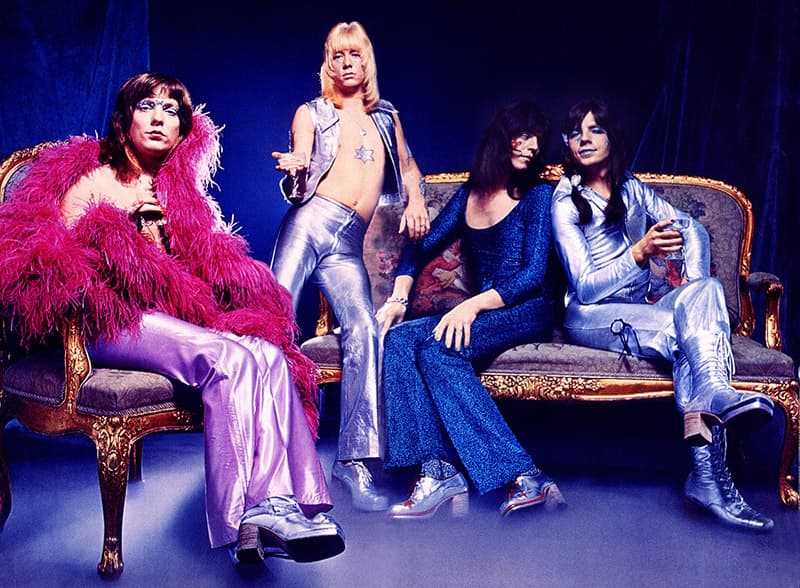
A LONGING FOR THE GOLDEN DAYS DEFINED IN RHYTHM AND REVERIE
Sweet’s “Sixties Man” stands as one of the English glam rock band’s most poignant late era reflections, a song that reaches backward through the haze of memory to evoke the spirit of a decade that forever changed popular music and cultural identity. Released in 1980 as a single and featured on the European edition of their album Waters Edge, the track did not secure prominent chart success upon its initial release and is generally regarded as one of Sweet’s final non-charting singles before the original band’s dissolution in the early 1980s. Yet its emotional imprint and thematic depth far exceed any conventional measure of commercial performance.
By 1980 Sweet were veteran survivors of the glitter and glam explosions of the early 1970s. They had ridden high with hits like “Ballroom Blitz,” “Fox On The Run,” and “Love Is Like Oxygen,” songs that detonated on the charts and defined the band’s theatrical yet hard-edged identity. But as the 1970s gave way to a brash new decade defined by post-punk urgency and synth pop futurism, Sweet found themselves both inheritors of their own legacy and outsiders to the rapidly shifting musical landscape. “Sixties Man” emerges from this context as an elegy not only for a decade but for the self that a generation once believed it was building.
Lyrically the song is riveting in its unabashed nostalgia. The narrator identifies himself candidly as a “sixties man,” a soul rooted in the ideals and soundscape of the 1960s, even as the world around him presses toward the present. He invokes emblematic imagery—“Woodstock nights… Strawberry fields and San Francisco too”—phrases that summon the collective mythos of 1960s counterculture. These referential touchpoints anchor the song’s emotional universe in a period of optimism, protest, experimentation, and communal dreaming. The juxtaposition of those emblematic scenes against a more disillusioned present captures a tension universal to aging listeners who witnessed seismic cultural shifts firsthand.
Musically, “Sixties Man” blends rock fundamentals with a bittersweet melodic approach that underscores Sweet’s craftsmanship as veteran songsmiths. The guitars possess a chime that feels simultaneously familiar and wistful, weaving between chordal support and expressive lead lines that elevate the theme of remembrance. The rhythm section grounds the track in propulsion even as its homage drifts toward introspection. Sweet’s seasoned performance radiates sincerity, a testament to their ability to channel lived experience into songs that resonate beyond mere stylistic homage.
The emotional core of “Sixties Man” is not an escape into romanticized memory but rather an articulation of identity shaped irrevocably by an era. The 1960s were a crucible of cultural reinvention: civil rights movements, antiwar protests, radical artistic experimentation, and an unbridled belief in the transformative power of music. For those who came of age within that crucible, the decade became more than a chronology; it became part of the self. Sweet’s song acknowledges that legacy with tender clarity, portraying its narrator not as trapped in the past but defined by it with honest affection.
Though “Sixties Man” may not occupy the same commercial heights as Sweet’s earlier hits, its lyrical poignancy and reflective depth secure its place as a compelling chapter in the band’s catalog. In an era where music and cultural identity intertwine ever more tightly, the song endures as a meditation on the enduring influence of a decade whose harmonies still echo in the hearts of those who remember its promise.