
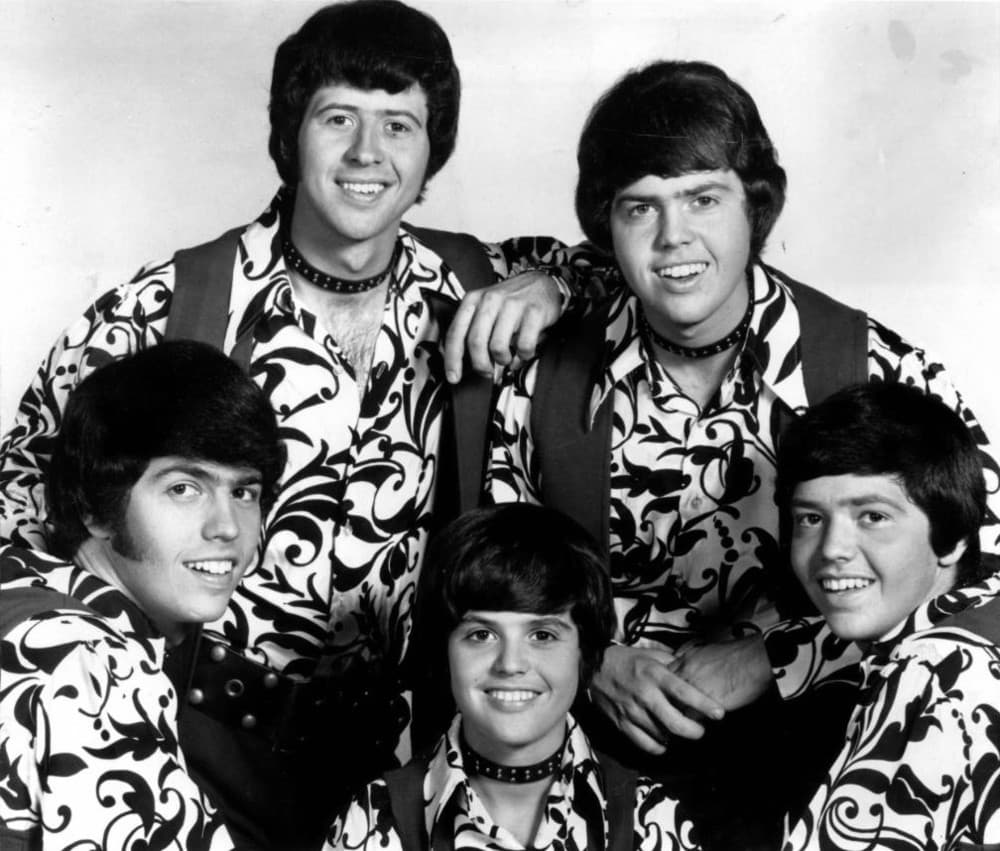
A Quiet Storm of Yearning in the Mid-Summer Breeze
“Chilly Winds” is a quietly haunting meditation from The Osmonds, nestled as the B-side to their 1971 single “Double Lovin’”, and featured on their sophomore studio album Homemade. Released on MGM, Homemade climbed to No. 22 on the Billboard Top LPs chart.
Though “Chilly Winds” never became a chart hit on its own, it occupies a singular place in the Osmonds’ discography — a delicate, introspective counterpoint to their pop-bubblegum persona. While “Double Lovin’” raced up the Hot 100 to reach No. 14, its flip side gestured inward, offering an emotional depth rarely explored by the clean-cut brothers.
The Story Behind the Song
Written by Lalo Schifrin and Mike Curb (the latter credited under the pseudonym “M. Charles”), “Chilly Winds” was not originally crafted as a pure Osmonds track. Rather, it first appeared as a theme for Roger Vadim’s controversial 1971 film Pretty Maids All in a Row. That cinematic origin already hints at the uneasy, philosophical undercurrents of the song — a sophistication quite removed from the Osmonds’ more radio-friendly fare.
Musically, the piece diverges from the youthful exuberance and bubblegum-pop that defined their early Stardom. Under the production of Rick Hall at Fame Studios in Muscle Shoals, the arrangement leans toward a folky, soulful palette — replete with gentle harmonies, spacious instrumentation, and an air of wistful reflection. The Osmonds, often associated with bubblegum simplicity, are here serving a more mature emotional architecture.
Lyrical and Emotional Analysis
Lyrically, “Chilly Winds” uses the metaphor of cold, restless air to articulate a sense of internal disquiet:
“Chilly winds may blow … / They come and they go … / … only talkin’ to the wind … going ’round and ’round.”
These winds are not just seasonal but emotional — they whisper of loneliness, uncertainty, and the constant motion of the soul. The repeated refrain “and I don’t know” underscores a yearning for direction, for connection, for something stable in a world that seems ever-shifting.
In the chorus and verses, the wind becomes a confidant, a companion, and a mirror. The singer talks to the wind, moves with it, turns in circles, searching for “traces of a friend” — but finding none. The “wind in the trees” swirls through memory, evoking a bittersweet nostalgia: more than a breeze, it’s a voice that carries the weight of what once was.
In the final verse, the lyrics shift to broader existential territory: “endless evolution / turned off revolution … hopelessly we’re playing with the mind.” There is a critique here, subtly conveyed, of social change and disillusionment: the revolution has lost its spark, and we are left reading between the lines, shelving our true desires (“kicks put on the shelf”) in favor of hollow ideals — perhaps “so high on life itself.”
This tension between appearance and reality resonates deeply in the context of The Osmonds’ public image. Known for their wholesome, clean-living image, here they deliver a song that is reflective, introspective, and even melancholic — a quietly subversive piece that reveals the emotional complexity beneath their polished harmonies.
Legacy and Impact
While “Chilly Winds” never became a commercial centerpiece, its significance lies in its contrast and emotional resonance. It hints at an unacknowledged maturity in The Osmonds’ body of work — a willingness to explore solitude, confusion, and internal struggle rather than simply celebrate teenage romance or pop exuberance.
Over time, it has become something of a cult favorite among Osmonds aficionados — a hidden gem that reveals another side of the brothers: not just singers, but storytellers sensitively attuned to change, memory, and existential longing. In that sense, “Chilly Winds” stands as a testament to their versatility and an evocative reminder that even in the most polished pop acts, there can be unspoken storms.