
A Quiet Longing for Hope Just Out of Reach
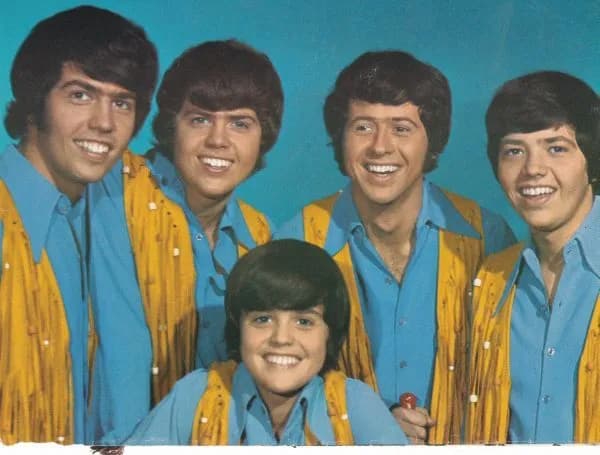
“At the Rainbow’s End” is a plaintive reflection on yearning and the elusive promise of renewal, performed by The Osmonds, and nestled deep on their 1976 LP Brainstorm.
Although this song was not released as a single and thus did not chart in the usual way, it remains a deeply resonant track from Brainstorm, their tenth studio effort. The album marked a period of introspection for the Osmond brothers, showcasing a more mature, contemplative side beyond their earlier pop fame.
The Heart Behind the Rainbow’s End
In “At the Rainbow’s End,” The Osmonds speak not of triumph, but of perseverance—and of a fragile, hopeful dream that lives somewhere beyond their grasp. Rather than the exuberant pop hits that defined much of their image, this song radiates a quiet melancholy, built on lush harmonies and a gentle melody that underscores its emotional weight.
Lyrically, the song opens with a sense of isolation: “Rain outside my window, when I want to walk through the park … I’m alone in the dark.” Such vivid lines paint a picture of someone longing for sunshine, not just in weather, but in spirit. The narrator admits a pattern of failure, “Guess whatever I choose, never win, I was born to lose,” yet he holds tightly to the notion of a mythical place—“the rainbow’s end”—a metaphor for a sanctuary of possibility and second chances.
That place, he confesses, is something he has “never been,” yet he clings to the belief that there, “you can begin again … it’s where your dreams will never die.” It’s not just a place of escape but a site of rebirth: the rainbow’s end becomes symbolic of emotional resurrection, a space where hurt and loneliness might be replaced with something tender and healing.
Significantly, there’s a vulnerability in the way The Osmonds ask, “Lady luck, where are you, and when are you gonna be staying with me?” This personification of fortune as a companion—or even a stranger—is poignant. It hints at a journey not just for external reward, but for internal solace, for a memory that stays, for peace of mind.
Musically, the song moves with a subdued gravity. According to chord charts, it’s built around the key of C and flows at around 91 BPM. The measured tempo, combined with the Osmonds’ rich vocal blend, gives the track a contemplative weight: you feel like you’re traveling with them, carrying those heavy dreams across an uncharted emotional landscape.
Legacy and Emotional Resonance
Because “At the Rainbow’s End” was never pushed as a commercial single, it remains something of a hidden gem in The Osmonds’ discography—a lullaby for the dreamers who listen closely. It stands apart from their radio hits (“One Bad Apple” or “The Proud One”) by offering no easy resolution, only a soft, unbroken hope.
In the broader arc of their career, this song reflects a willingness to move beyond the clean-cut image of teen idols into more emotionally complex territory. As one critic pointed out, the Osmonds’ 1970s work often sought to deepen their sound, but wasn’t always embraced in its time. Yet “At the Rainbow’s End” remains meaningful today because its longing is timeless. It invites listeners to dwell with the uncertainty of longing—and to believe that in the journey itself there might be something beautiful enough to hold onto.
For many fans, the rainbow’s end is not just an impossible destination—it’s the very reason to keep walking, to keep dreaming, in the quiet spaces between loss and faith.