
A Quiet Reckoning of Self — The Osmonds’ “Mirror, Mirror”
A contemplative moment of self-doubt in an era of boy-band gloss, “Mirror, Mirror” by The Osmonds is a rare emotional fissure in their early-’70s catalog that reflects insecurities beneath their polished veneer.
Released on The Osmonds’ 1973 concept album The Plan, “Mirror, Mirror” occupies a unique place in their discography. The Plan peaked at number 58 on the Billboard 200. While “Mirror, Mirror” was not issued as a major single hit in the U.S., it remains an evocative album track—and one that reveals more about the group’s internal tensions than their glossy pop anthems.
At its surface, the song is deceptively simple: a two-minute-and-twenty-five-second meditation delivered in tight, haunting harmonies. But beneath that simplicity lies a deeper grappling with identity, authenticity, and the distorted self we present to the world. The Osmonds—known to millions for their wholesome image—turn inward here, wrestling with their own reflection. The lyrics speak plainly:
“Mirror, mirror on the wall / I don’t like your life at all / How did we ever come to be / The kind of person that I see.”
This is not a fantasy refrain borrowed from fairy tales; it frames an existential crisis.
The Plan itself was a bold departure for The Osmonds—a concept album steeped in Mormon theology, existential questioning, and spiritual ambition. Amid tracks about cosmic war, salvation, and the afterlife, “Mirror, Mirror” serves as a deeply personal counterpoint. Composed by Alan, Merrill, and Wayne Osmond, the song is less about religious doctrine than about inner honesty.
Musically, it pairs introspective lyrics with a relatively sparse arrangement. The production feels intimate, almost confessional. The vocals—layered in characteristic Osmond precision—seem to surround you, as if you’re overhearing a private conversation between one’s public persona and a more fragile inner self. The melody refuses to soar; instead, it gently circles, reinforcing the sense of being trapped in one’s own reflection.
Lyrically, there’s a tension between self-accusation and yearning for transformation. The narrator addresses the mirror as both adversary and doppelgänger: “Mister, mister look-alike / Don’t we both want what is right.” In that line, the “mister” could be interpreted as an alternate self, a shadow self—the person one becomes when trying to reconcile image with integrity. There’s self-deception (“You can lie and you can cheat”), but also a plea for honesty and change (“I want to change, but can’t you see / You’re the one who’s stopping me”). That internal standoff is quietly devastating.
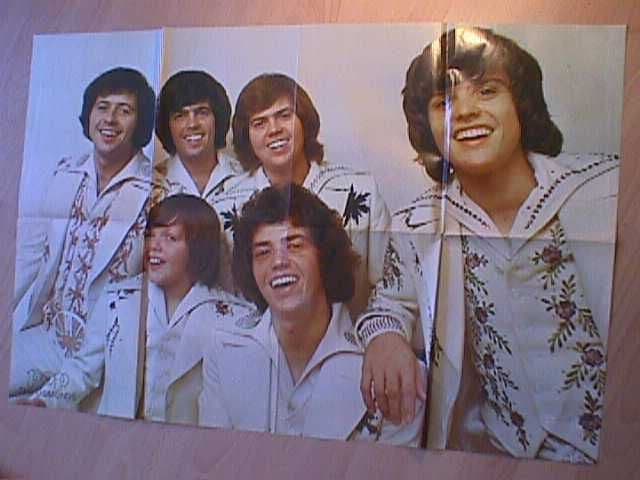
Culturally, “Mirror, Mirror” may not be the Osmonds’ most famous song, but it is significant for how it slices through their clean-cut public persona. At a time when they were often dismissed as saccharine teen idols, this song reveals a more mature, introspective side. It suggests that even in the sunshine of fame, there are shadows—self-doubt, regret, longing.
Its emotional legacy lies in its humility. It doesn’t offer triumphant resolution; it doesn’t pretend the mirror can be fixed with a single look. Instead, it holds space: for vulnerability, for the quiet questioning that comes when the lights are off and the singer is left alone with their reflection. For that reason, “Mirror, Mirror” stands as one of The Osmonds’ most quietly profound moments—a soulful confession disguised in pop’s gentle garb.