
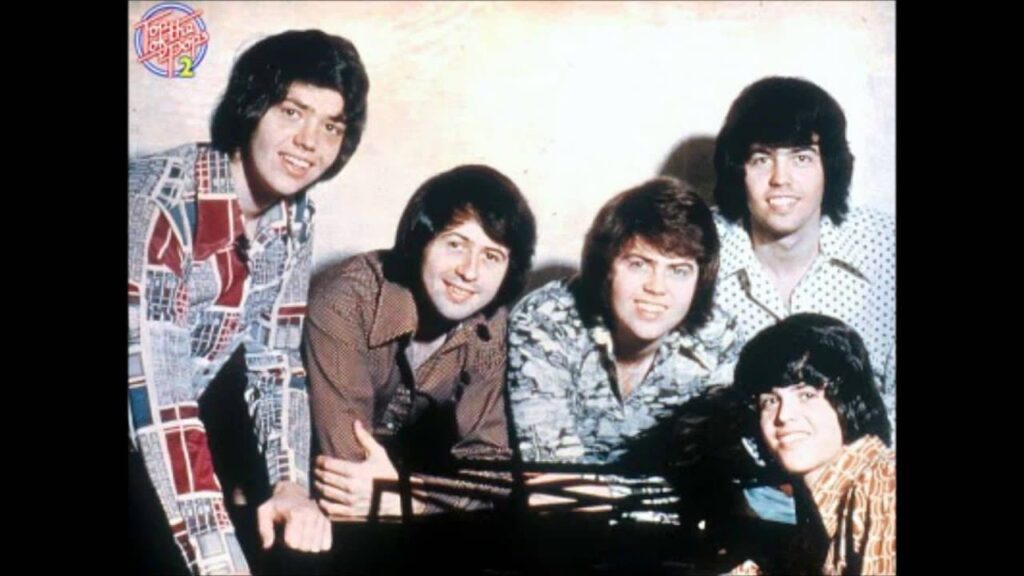
A young group finds its voice in a cautionary tale that rose to the top of American pop and reshaped their artistic identity.
When The Osmonds released One Bad Apple on their 1970 album Osmonds, the single quickly ascended to remarkable commercial success, reaching number 1 on the Billboard Hot 100 in early 1971. It was a defining moment that transitioned the group from a television-friendly family act to a chart-dominant pop force. The recording captured a new energy for the brothers, aligning them with the era’s flourishing soul-inspired pop sound while preserving the clean, melodic precision that had already won them national attention.
The song’s creation is tied closely to the musical climate of its time. Written by George Jackson, One Bad Apple was originally intended for The Jackson 5, whose early hits had set a template for youthful, buoyant soul. When the track instead went to The Osmonds, it became a bridge between two cultural spaces: the polished variety-show roots of the Utah family and the exuberant Motown-inflected rhythms that dominated the airwaves. The result was a sound that carried both worlds with surprising harmony. The production leans on a tight groove, crisp guitar lines, and a rhythmic pulse that foregrounds Donny Osmond’s lead vocal. His delivery is youthful yet commanding, shaped by a clear sense of phrasing that mirrors the emotional ambivalence woven through the lyric.
At its core, the song explores the fragile borders of trust and forgiveness. The narrator pleads not to be judged by the failings of someone who came before, a theme that resonates across generations and musical eras. The simplicity of the message is part of its enduring appeal. There is no elaborate storyline; instead, the lyric distills a universal sentiment into direct language that carries a subtle ache beneath its upbeat arrangement. The instrumental brightness, full of handclaps and danceable rhythm, stands in deliberate contrast to the vulnerability in the words. This interplay between sonic optimism and emotional unease is what gives One Bad Apple its lasting depth.
Culturally, the single marked a pivotal chapter in the group’s evolution. Its chart-topping performance validated their move into contemporary pop and opened the door to a series of successful singles that would define their early 1970s peak. More importantly, it demonstrated how a family group could adapt to shifting musical landscapes without losing the cohesion and vocal interplay that set them apart. Decades later, the track remains a testament to the moment when youthful charm, industry savvy, and a keen sense of musical timing converged to create a hit that still echoes across the history of American pop.