
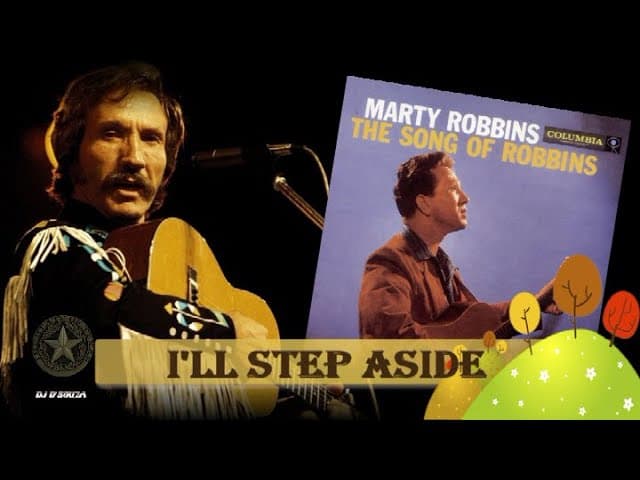
A quiet act of surrender where love proves its dignity by knowing when to let go
Released during a period when Marty Robbins was deepening his reputation as one of country music’s most emotionally literate voices, I’ll Step Aside arrived not as a chart chasing single but as a reflective album cut on The Drifter, an album that further reinforced Robbins’ mastery of restraint and narrative clarity. While the song did not register as a major hit on the singles charts upon release, its placement within this album context is essential. The Drifter itself performed solidly within the country market, and it showcased Robbins at a moment when commercial momentum mattered less than emotional precision. In that environment, I’ll Step Aside functions not as a bid for attention but as a deliberate act of artistic understatement.
The song’s power lies in its refusal to dramatize heartbreak through accusation or bitterness. Instead, I’ll Step Aside offers a portrait of love expressed through withdrawal. The narrator recognizes that affection alone does not grant ownership, and that devotion, when unreturned or redirected, must sometimes yield space rather than demand loyalty. This is not resignation born of weakness. It is a conscious moral decision, framed with humility and quiet resolve. Robbins delivers the lyric as though each line has been carefully weighed, measured not by what it confesses but by what it withholds.
Musically, the arrangement supports this emotional posture with elegance. The instrumentation remains sparse and unintrusive, allowing Robbins’ voice to occupy the center without competition. His phrasing is unhurried, almost conversational, yet shaped by an unmistakable gravity. There is no vocal grandstanding here. Robbins sings as a man who understands that true heartbreak rarely announces itself loudly. Instead, it settles in the pauses, in the softened consonants, in the steady acceptance that the story has reached its final page.
Lyrically, I’ll Step Aside explores a theme that recurs throughout Robbins’ broader catalog. Love is portrayed not as conquest but as stewardship. When circumstances change, dignity requires restraint. The narrator does not vilify the beloved, nor does he frame himself as a martyr. He simply acknowledges an emotional truth and acts accordingly. This moral clarity is what gives the song its lasting resonance. In an era when country music often leaned toward melodrama, Robbins chose emotional adulthood.
Over time, I’ll Step Aside has grown in stature precisely because it resists spectacle. It rewards attentive listening and emotional maturity. For seasoned listeners, the song feels less like a performance and more like a private confession overheard by chance. It represents Robbins at his most introspective, trusting that sincerity, delivered without embellishment, carries its own authority.
Within Marty Robbins’ enduring legacy, I’ll Step Aside stands as a testament to the quiet strength of emotional intelligence. It reminds us that sometimes the most profound declarations of love are made not by holding on, but by knowing when to let go with grace.