
A restless confession about motion without meaning, and the quiet cost of never standing still
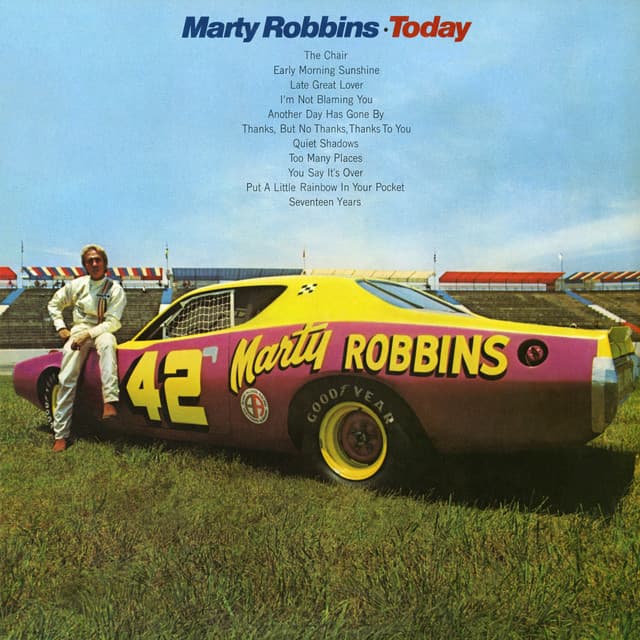
Upon its release, Too Many Places arrived without the fanfare of a chart-climbing single, bypassing the major singles rankings and settling instead into the deeper grooves of Marty Robbins’ Columbia era album work. Recorded and issued during a period when Robbins was releasing music at a prolific pace, the song belongs to his studio catalog rather than his hit parade. That context matters. It frames Too Many Places not as a commercial statement, but as a personal one, a reflective piece embedded within an album sequence rather than designed for radio urgency.
For listeners accustomed to Robbins as the master storyteller of gunfighters, heartbreak, and cinematic Western myth, Too Many Places offers a different kind of narrative. This is not a tale of external drama, but of internal dislocation. The song speaks from the perspective of a man perpetually in motion, moving from town to town, moment to moment, without ever finding resolution. Robbins does not dramatize the travel. He questions it. The very title suggests excess rather than opportunity, movement as burden rather than freedom.
Lyrically, the song revolves around accumulation. Too many roads, too many rooms, too many chances that blur together until none of them feel permanent. Robbins’ voice, always disciplined and controlled, delivers these lines with restraint. There is no desperation in the performance, only a steady weariness. That choice is crucial. The emotional power of Too Many Places lies in how calmly it admits exhaustion. The narrator is not running anymore. He is taking stock, realizing that constant motion has diluted meaning rather than expanded it.
Musically, the arrangement reinforces this emotional tension. The tempo is measured, neither urgent nor slow, creating the sense of a man walking rather than fleeing. The instrumentation stays understated, allowing Robbins’ phrasing to carry the weight. Each line lands with clarity, reinforcing the idea that this is a song about awareness rather than regret. It is not about mistakes made in one place, but about the inability to stay anywhere long enough to make something real.
Within Robbins’ broader legacy, Too Many Places stands as a mature meditation on identity. At a time when American popular music often romanticized travel and freedom, Robbins presented the other side of that myth. He understood that movement without purpose can become its own form of confinement. The song resonates precisely because it avoids spectacle. It speaks quietly, confidently, and with lived understanding.
Decades later, Too Many Places endures as one of those album tracks that rewards close listening. It captures Marty Robbins not as a legend or chart figure, but as a thoughtful observer of human restlessness, offering a timeless reflection on the cost of never choosing to stay.