
A hushed serenade where love speaks softly in the language of distance and devotion
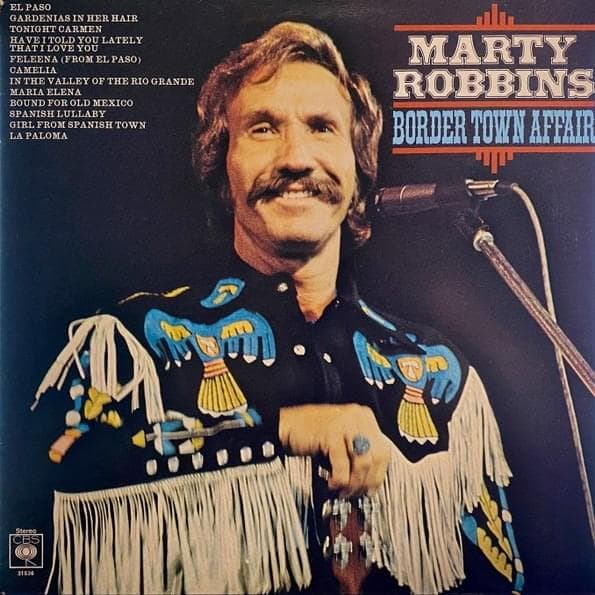
When Marty Robbins released Spanish Lullaby as part of the 1967 album Tonight Carmen, the song arrived quietly, without the machinery of a major chart campaign or the urgency of a hit single. It did not storm the Billboard rankings, nor was it positioned to compete with Robbins’ more commercially dominant western ballads. Instead, it lived where many of his most enduring performances reside, deep within the album itself, waiting for attentive listeners. Nestled inside Tonight Carmen, a record steeped in Latin atmosphere and romantic fatalism, Spanish Lullaby stands as one of Robbins’ most intimate artistic statements.
The power of Spanish Lullaby lies not in narrative spectacle but in restraint. Robbins approaches the song as a whispered confession rather than a declaration. The arrangement is spare and deliberate, drawing from Spanish and Mexican musical colors that Robbins had long admired. Gentle guitar lines and subtle rhythmic phrasing cradle the melody, allowing the voice to remain the emotional center. There is no urgency here, only patience. This is music that breathes slowly, as if aware that raising its voice would break the spell.
Lyrically, Spanish Lullaby operates as an expression of love filtered through separation. It feels addressed not to a crowd but to a single presence, perhaps distant, perhaps unreachable. Robbins sings as if he is standing in the doorway between waking and sleep, offering reassurance rather than promises. The lullaby is not meant to persuade or conquer. It exists to comfort, to remind someone that they are held in thought even when miles intervene. That emotional humility is central to the song’s lasting resonance.
What distinguishes Marty Robbins in this performance is his understanding of silence. He allows space between phrases, trusting that the listener will follow him into the quiet. His voice carries warmth without sentimentality, and his phrasing suggests a man who knows that love does not always require resolution. Sometimes it requires only presence. In an era when popular music often leaned toward grand gestures, Robbins chose subtlety, crafting a song that feels more like a private letter than a public performance.
Within the broader context of Tonight Carmen, Spanish Lullaby reinforces Robbins’ lifelong fascination with romance shaped by culture, geography, and longing. The album itself is steeped in themes of love colored by tradition and emotional distance, and this song becomes its emotional exhale. It is not tragic, nor is it triumphant. It simply exists, suspended in tenderness.
Over time, Spanish Lullaby has become a quiet favorite among listeners who explore Robbins beyond his chart-topping western epics. Its legacy is not measured in rankings but in intimacy. It is the kind of song discovered late at night, when the world has softened and memory feels close at hand. In that stillness, Marty Robbins offers a lullaby not just in Spanish inflection, but in spirit, a gentle reminder that some of the most profound songs are the ones that never raise their voice.