
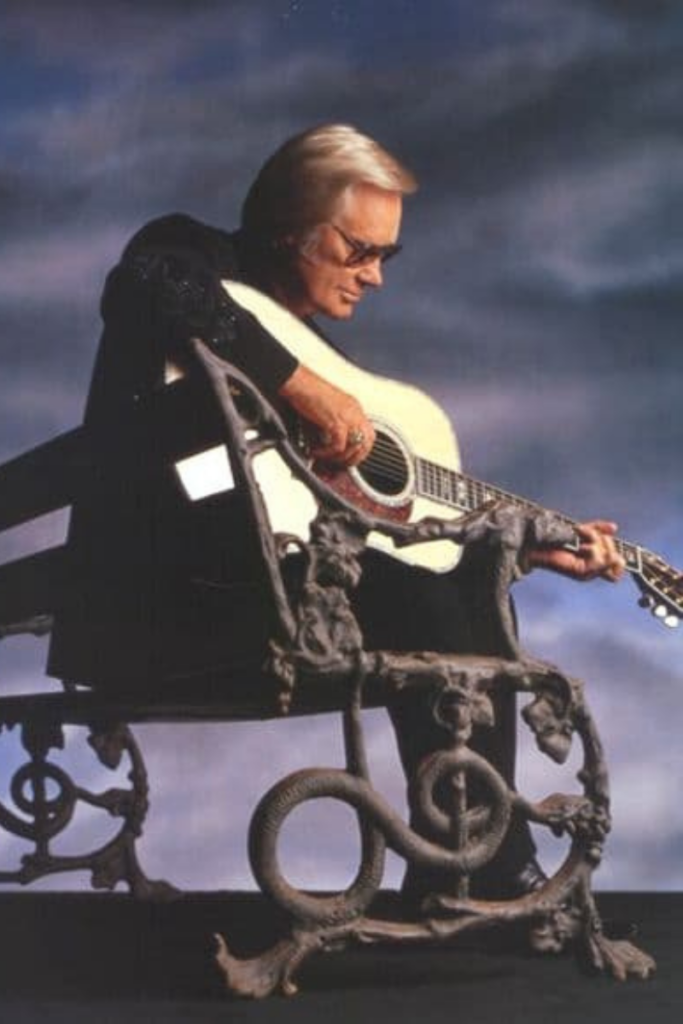
A quiet heartbreak where pride survives even after love has already slipped away
Few songs in the history of country music capture wounded dignity as elegantly as She Thinks I Still Care by George Jones. Released in 1962 as a single and later included on the album George Jones Sings Bob Wills, the recording became one of the defining moments of Jones’s early career. It climbed to No. 1 on the Billboard Hot Country Singles chart, confirming what many listeners already sensed: that George Jones possessed a voice capable of transforming the smallest emotional detail into something timeless.
Written by Dickey Lee and Steve Duffy, She Thinks I Still Care thrives on a deceptively simple premise. The narrator insists that he has moved on from a past relationship, calmly listing the ways he has proven his indifference. He keeps her photograph, he remembers her birthday, he occasionally asks about her well being. These gestures, he claims, mean nothing. They are merely habits, coincidences, misunderstandings. Yet the more he denies the lingering affection, the more the truth quietly reveals itself between the lines.
This tension between denial and confession lies at the heart of the song’s brilliance. Country music has long explored heartbreak, but She Thinks I Still Care approaches the subject from a subtler angle. Instead of openly mourning lost love, the narrator builds a careful façade of emotional distance. Pride becomes his shield. He refuses to admit vulnerability, even when every detail of the story suggests otherwise.
George Jones understood this emotional contradiction instinctively. His performance is restrained, almost conversational, allowing the irony of the lyrics to carry their full weight. Rather than pushing the melody with dramatic flourishes, Jones lets each phrase settle gently into the listener’s ear. The pauses between lines become as important as the words themselves. In those small spaces, one can hear the character wrestling with feelings he cannot quite suppress.
The arrangement supports this delicate balance. Traditional country instrumentation, including steel guitar and understated rhythm, provides a soft framework around Jones’s voice. Nothing in the recording distracts from the central emotional conflict. The music moves with quiet patience, mirroring the slow realization that the narrator’s indifference is merely an illusion.
Over time, She Thinks I Still Care has become one of the most widely admired performances in George Jones’s immense catalog. It also earned renewed attention when artists such as Elvis Presley recorded their own interpretations, a testament to the song’s enduring narrative power. Yet the original recording remains definitive because Jones captures something profoundly human: the instinct to protect one’s pride even when the heart refuses to cooperate.
Listening to She Thinks I Still Care today feels like opening an old letter never quite thrown away. The voice is steady, the story controlled, but the emotion lingers just beneath the surface. It reminds us that sometimes the deepest truths in music are revealed not through confession, but through the quiet struggle to deny what we still feel.