
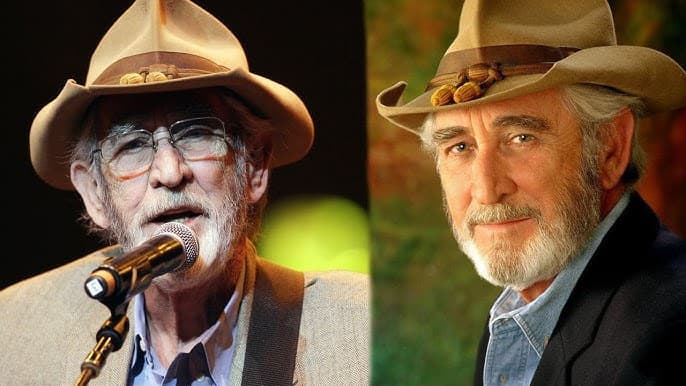
A Quiet Voice Filled the Mountains More Completely Than Any Shout Ever Could
By the time Don Williams arrived in Franklin, North Carolina, in September of 2012, he was no longer chasing radio success or chart momentum. That story had already been written decades earlier through a remarkable run of country classics and more than a dozen Number One hits that turned his calm baritone into one of the most recognizable voices in American music. The performance at the Smoky Mountain Center for the Performing Arts in Franklin on September 15, 2012, came during a late-career touring period when Williams had become something rarer than a star: a trusted companion to generations of listeners.
What made a Don Williams concert so enduring was never spectacle. There were no grand gestures, no desperate attempts to modernize himself, no need to overpower an audience with volume or theatricality. Williams understood something fundamental about country music that many performers eventually forget: intimacy can travel farther than force. Even in a theater tucked into the mountains of North Carolina, his songs carried the emotional weight of lived experience. The room did not need fireworks when it already had that voice.
By 2012, Williams had long since earned the nickname “The Gentle Giant,” and the title fit him with unusual precision. His recordings had always sounded as though they were spoken directly to one person sitting alone at the end of a difficult day. Songs like I Believe in You, Good Ole Boys Like Me, and Lord, I Hope This Day Is Good were built not around dramatic heartbreak, but around emotional steadiness. That became the defining atmosphere of his later concerts as well. Audiences did not attend merely to relive nostalgia. They came to hear reassurance delivered in human form.
The Franklin performance existed within that tradition. Around this period, Williams’ live sets often moved through a catalog that felt almost autobiographical in its simplicity: reflections on aging, memory, faith, regret, and endurance. There was an unhurried quality to everything he did. He never sang as though he were trying to convince the crowd of his sincerity because sincerity was already embedded in the grain of his voice. That restraint became increasingly powerful in an era where country music often leaned toward excess.
What remains striking about Don Williams, especially in performances from his later years, is how little distance existed between the man and the material. Many artists perform songs. Williams seemed to inhabit them quietly, almost conversationally. He sang about ordinary people because he himself never stopped sounding like one. That humility became his artistic signature.
The Franklin concert now feels even more poignant in retrospect because it captured Williams in the final chapter of a career built on emotional honesty rather than mythology. He did not need reinvention to remain relevant. His relevance came from permanence. Long after trends faded and louder voices disappeared, Don Williams still sounded like home.