
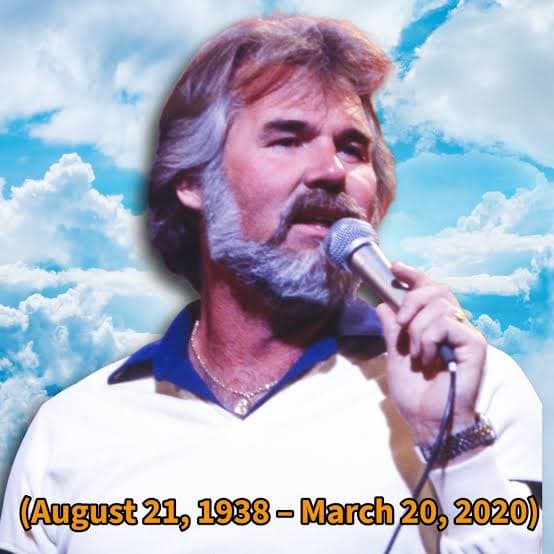
A voice that carried the quiet dignity of heartbreak and the timeless soul of country storytelling
Few artists have embodied the narrative power of country music as completely as Kenny Rogers, a figure whose career was defined not by a single song, but by a catalog of stories that etched themselves into the emotional memory of generations. His signature recordings, particularly those collected in landmark albums like The Gambler, did more than climb charts, they dominated them, with multiple singles reaching No. 1 on the Billboard Country chart and crossing over into mainstream pop success. In an era when genre lines often dictated artistic boundaries, Kenny Rogers dissolved them with ease, becoming one of the most commercially successful and culturally resonant voices of his time.
To understand the legacy of Kenny Rogers is to understand the rare balance he achieved between storyteller and interpreter. His voice was never about technical excess. It was weathered, conversational, and deeply human. That quality allowed him to inhabit a song rather than simply perform it. Whether delivering the moral fable of The Gambler, the quiet devastation of Lucille, or the tender introspection of Through the Years, Rogers approached each lyric as if it were lived experience, not mere composition.
There is a particular stillness in his recordings that invites reflection. Unlike many of his contemporaries who leaned into dramatic vocal flourishes, Kenny Rogers understood restraint as an artistic virtue. He allowed space within a song, space for the listener to project their own memories, regrets, and hopes. This is especially evident in his ballads, where time seems to slow, and each word carries the weight of unspoken emotion.
His rise to prominence did not follow a straightforward path. Before becoming a country icon, Rogers navigated multiple musical identities, from jazz-influenced ensembles to pop-oriented groups. This eclectic foundation gave him a unique interpretive range. By the time he fully embraced country music, he brought with him a sensibility that broadened its appeal without diluting its core. His success in the late 1970s and early 1980s marked a turning point, not just for his career, but for the genre itself, opening doors for crossover artists who followed.
Beyond the charts and accolades, the enduring power of Kenny Rogers lies in his ability to articulate universal truths through simple narratives. His songs often revolve around choice, consequence, love, and loss, themes as old as music itself. Yet in his delivery, they feel immediate and personal. He sang not as a distant narrator, but as someone who had stood at those crossroads, faced those dilemmas, and carried their outcomes.
In remembering Kenny Rogers, one does not recall only a voice, but a presence. A figure who stood at the intersection of storytelling and songcraft, translating life’s complexities into melodies that remain quietly profound. His music endures because it does not demand attention, it earns it, patiently, like a story told by someone who knows that the truth needs no embellishment.