
Quiet promise of heaven that rises above earthly sorrow and longing
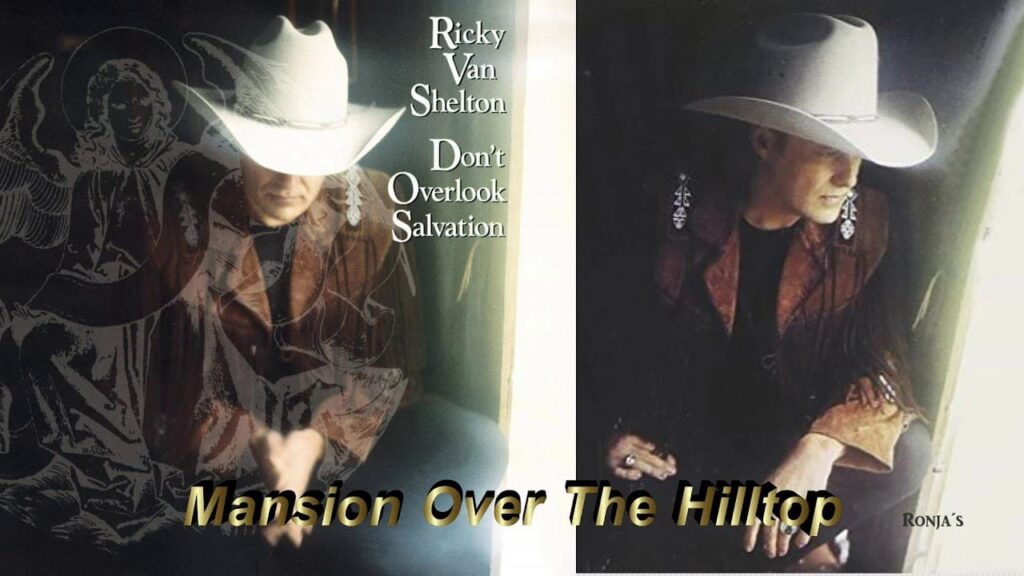
Within the deeply rooted traditions of American gospel music, Ricky Van Shelton offered a reverent and heartfelt interpretation of Mansion Over The Hilltop, a song long cherished for its vision of spiritual reward beyond life’s hardships. Featured on his gospel collection Don’t Overlook Salvation (1992), Shelton’s rendition did not chase commercial chart dominance but instead found its place in a more enduring register, one measured by emotional resonance and devotional sincerity rather than radio metrics.
Originally written by Ira Stanphill, Mansion Over The Hilltop carries the DNA of mid-century gospel songwriting, where faith is expressed not through abstraction, but through tangible imagery. A mansion, a hilltop, streets of gold, these are not merely symbols but anchors for hope, crafted to comfort those burdened by poverty, grief, or spiritual fatigue. In Shelton’s hands, the song is delivered with a restraint that honors its sacred origins. His voice does not overpower the message; it serves it.
What distinguishes this performance is its balance between country sensibility and gospel conviction. Ricky Van Shelton, known primarily for his neotraditional country success, approaches the song with an understated humility. There is no theatrical crescendo, no attempt to modernize or embellish beyond recognition. Instead, he leans into clarity of phrasing and emotional honesty. Each line unfolds like a quiet testimony, shaped by patience rather than urgency.
Lyrically, Mansion Over The Hilltop speaks to a universal condition, the tension between present struggle and future promise. The narrator acknowledges a life that may lack material wealth or earthly comfort, yet refuses to measure existence by those deficits. There is a profound shift in perspective here. The “mansion” is not simply a reward, it is a redefinition of value itself. What matters is not what is owned in this life, but what is awaited in the next.
This theme resonates deeply within the broader tradition of gospel and country music, where stories of hardship are often paired with unwavering faith. Shelton’s interpretation aligns with that lineage, echoing the emotional clarity found in artists who understood that simplicity can carry immense weight. The arrangement supports this philosophy. Gentle instrumentation, unintrusive and warm, creates a space where the vocal can carry both the melody and the message without distraction.
There is also an intimate quality to Shelton’s delivery that invites reflection rather than spectacle. Listening closely, one senses not just performance, but belief. The pauses between phrases feel intentional, as though each word is being considered before it is offered. This measured approach allows the listener to inhabit the song, to see their own struggles mirrored in its verses and their own hopes reflected in its promise.
Over time, Mansion Over The Hilltop has endured not because it evolves, but because it remains steadfast. In Shelton’s interpretation, that steadfastness becomes its greatest strength. It reminds us that music, at its most powerful, does not always seek to dazzle. Sometimes, it simply reassures, quietly, patiently, that beyond the noise of the present, something greater waits just over the hill.