
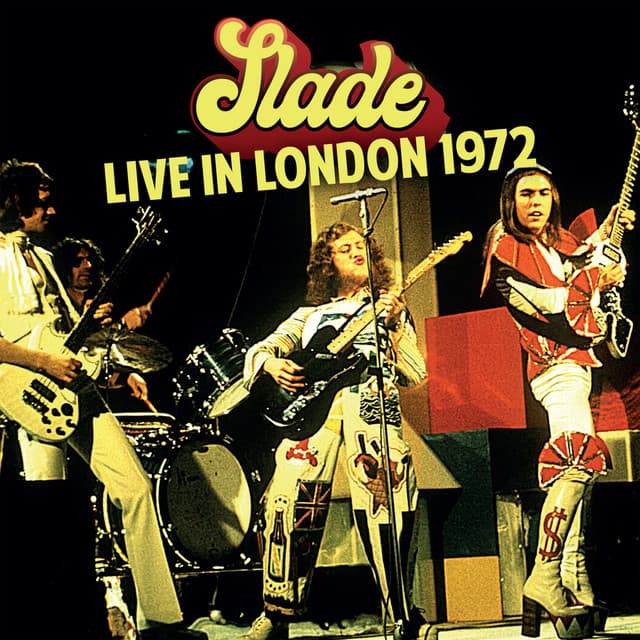
A Hard Rock Cry for Freedom, Sweat, and the Beautiful Chaos of the Early Seventies
When Slade released “Hear Me Calling” on the landmark live album Slade Alive! in 1972, they were no longer merely a promising British rock act clawing through club circuits. They were becoming a cultural force. The album itself reached No. 2 on the UK Albums Chart and helped cement the group’s reputation as one of the fiercest live bands of the era, arriving just before their explosion into mainstream dominance with a string of chart-topping singles. Though “Hear Me Calling” had originally appeared in studio form on Play It Loud in 1970, it was the volcanic performance captured on Slade Alive! that transformed the song into something larger than a recording. It became a statement of identity.
There is a reason the live version endures with such force. In the early 1970s, British rock was beginning to split into camps. Progressive bands were becoming increasingly grand and cerebral. Glam rock was dressing itself in glitter and theatricality. Heavy rock was turning darker and heavier. Slade, meanwhile, stood defiantly in the middle of the working-class crowd, sleeves rolled up, amplifiers screaming, sounding less like distant rock stars and more like four men erupting directly from the factory floor and pub backroom.
“Hear Me Calling” captures that energy with astonishing precision. The song opens not with elegance, but with momentum. Dave Hill’s guitar grinds forward like machinery struggling against its own limits, while Don Powell’s drumming pounds with a physical immediacy that feels almost industrial. Then comes Noddy Holder’s voice, one of the great untamed instruments in British rock history. He does not sing the song so much as hurl it into the room.
Lyrically, the track is built around yearning and pursuit. The repeated plea of “hear me calling” sounds simple on paper, yet in performance it becomes desperate, almost primal. It is the sound of someone fighting to be recognized above the noise of modern life. In another band’s hands, the song might have become polished blues-rock. With Slade, it becomes communal catharsis. The audience noise bleeding into the recording is crucial. You can hear the room reacting in real time, not as passive spectators, but as participants in the emotional combustion.
That was the genius of Slade Alive!. At a time when many live albums were heavily overdubbed and sanitized, this record preserved the rough edges. You can feel the sweat, the compression of bodies near the stage, the reckless volume bouncing off club walls. “Hear Me Calling” thrives in that environment because the song itself is about connection. It is about demanding to be heard in a world moving too fast to listen.
There is also a fascinating tension inside the performance. Beneath the aggression lies vulnerability. Holder’s vocal carries exhaustion as much as confidence. The band sounds triumphant, but also hungry, still fighting for permanence. That tension gives the recording its emotional weight decades later. It documents a band standing precisely on the edge between obscurity and immortality.
The legacy of “Hear Me Calling” is often overshadowed by the massive singalong hits that followed, but longtime listeners understand its importance. This was the sound of Slade before the glitter fully settled, before the football-chant choruses conquered radio. It revealed the band’s roots in raw rhythm-and-blues and hard touring discipline. More importantly, it captured something many polished studio recordings fail to preserve: the dangerous unpredictability of a live rock band discovering its own power in front of an audience that could barely contain it.
More than fifty years later, the recording still feels alive because it was never striving for perfection. It was striving for truth.