
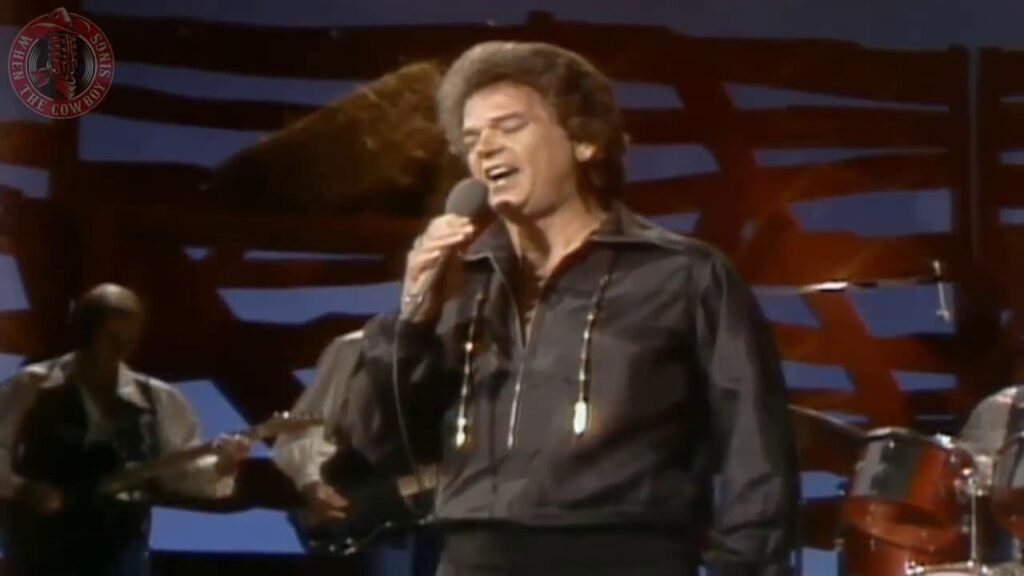
A Man Kneels Before Love and Learns How Fragile Pride Really Is
When Conway Twitty released “Don’t Take It Away” in March of 1979, the song did more than climb to No. 1 on the Billboard Hot Country Singles chart. It reaffirmed Twitty’s singular gift for turning emotional surrender into something almost unbearably intimate. Featured on the album Cross Winds, the single became his twenty-first country chart-topper, a remarkable feat in an era crowded with giants of the genre. Yet statistics alone cannot explain why the record still lingers in the memory like the final conversation after a long night of regret.
There is a peculiar ache inside “Don’t Take It Away” that separates it from many country confessionals of the late 1970s. Written by Troy Seals and Max D. Barnes, the song avoids the easy theatrics of heartbreak. Instead, it chooses humiliation. The narrator is not defiant. He is not angry. He is standing in front of his lover’s friends, stripped of dignity, admitting fault in plain language. Country music has always understood that real devastation rarely arrives with poetry. Sometimes it arrives with a man saying, “I was wrong,” and meaning it with every exhausted breath.
That is where Conway Twitty was nearly untouchable.
His voice on this recording does not merely sing the lyric. It bends around it. Twitty had a way of stretching syllables until they sounded like physical pain, and on this song he uses restraint as his greatest weapon. He never oversells the apology. He lets the desperation simmer beneath the surface, allowing the listener to hear the terror of a man realizing love may not survive one more betrayal.
The production on Cross Winds is equally important to the song’s endurance. The arrangement is polished Nashville country, but there is remarkable space inside it. The steel guitar does not interrupt the confession; it shadows it. The rhythm section moves patiently, almost cautiously, as if the entire band understands they are accompanying a private reckoning. In lesser hands, the song could have drifted into melodrama. Instead, it feels painfully adult.
And perhaps that is why the record has aged so gracefully.
Many country songs of the era revolved around heartbreak after the collapse. “Don’t Take It Away” exists in the terrifying moment before collapse becomes permanent. The title itself is revealing. The narrator is not begging for passion or excitement. He is pleading for continuity, for the preservation of something already wounded but still alive. “Love don’t come easy” becomes less a lyric than a hard-earned philosophy. By middle age, many listeners understand exactly what the song means. The rarest thing in life is not romance. It is forgiveness.
There is also something deeply human in the way Twitty refuses to portray the speaker as heroic. He crossed the line. He admits it openly. That honesty gave the performance unusual weight in 1979, and it still resonates decades later in an age where vulnerability is often performed rather than lived.
Within the vast catalog of Conway Twitty, a career filled with towering ballads and unforgettable duets, “Don’t Take It Away” remains one of his purest emotional recordings because it understands a timeless truth: sometimes love is not lost in one catastrophic moment, but in the slow erosion caused by pride, carelessness, and the belief that devotion will always wait for us. Twitty sang the song like a man discovering that lesson too late, and that is precisely why the record still hurts.