
A restless heart dances between longing and illusion in one of rock and roll’s most deceptively joyful dreams.
Released in 1962, “Dream Baby (How Long Must I Dream)” became another towering success in the remarkable early-1960s run of Roy Orbison, climbing to No. 4 on the U.S. Billboard Hot 100 and reaching No. 2 in the United Kingdom. Written by the legendary songwriter Cindy Walker and later included on Roy Orbison’s Greatest Hits, the song arrived during a period when Orbison was redefining what emotional vulnerability could sound like in popular music. While many of his contemporaries leaned heavily into swagger or rebellion, Orbison stood apart — a lonely operatic figure wrapped in dark sunglasses, singing not about conquest, but yearning.
What makes “Dream Baby” so enduring is the fascinating contradiction at its center. On the surface, the record feels buoyant, almost carefree. The rhythm moves with a light rockabilly pulse, propelled by bright guitar lines and an infectious swing that seems made for neon-lit dance halls and late-night radio. Yet beneath that energy lies a question that Orbison asks with unmistakable ache: How long must I dream? It is not merely the cry of a man in love. It is the sound of someone trapped between fantasy and emotional reality, unable to fully possess the life or affection he imagines.
That tension was central to Orbison’s artistry. Few singers understood loneliness the way he did. His voice could rise from tenderness into near-operatic despair within seconds, and even in a comparatively upbeat recording like “Dream Baby,” there is always the shadow of heartbreak waiting just outside the frame. He sings as though the dream itself is sustaining him, yet also quietly destroying him. The listener hears both hope and exhaustion in the same breath.
The composition itself reflects the elegance of Cindy Walker’s songwriting. Walker, already respected as one of America’s finest country and pop writers, gave Orbison a lyric built on simplicity rather than ornamentation. There are no elaborate metaphors here, no poetic excess. Instead, the song thrives on repetition and emotional immediacy. Dreams become both refuge and prison. The beloved figure is never fully tangible; she exists somewhere between memory, desire, and imagination. Orbison understood instinctively how to inhabit that emotional uncertainty.
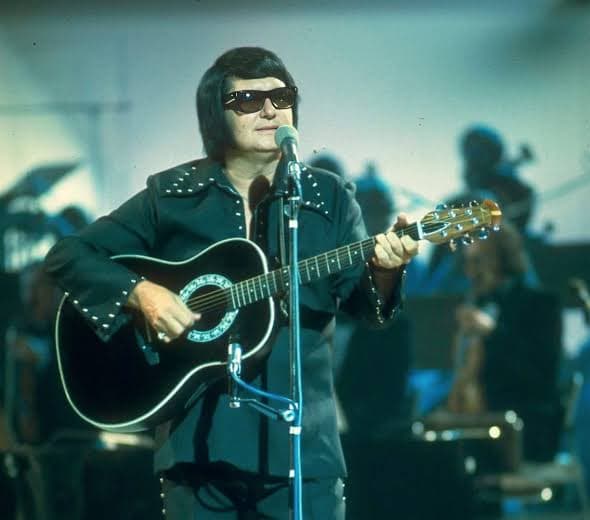
The 1965 concert performance carries additional weight because it captures Orbison in his natural environment: not as a studio construct, but as a commanding live interpreter of emotion. By that point, his reputation had already become international, and performances like this revealed how effortlessly he could hold an audience without theatrical excess. He rarely moved dramatically onstage. He did not need to. The voice itself carried the drama.
Listening today, “Dream Baby” feels like more than a hit from rock and roll’s golden age. It feels like a bridge between eras — rooted in early rockabilly tradition, yet emotionally sophisticated enough to anticipate the introspective songwriting that would dominate later decades. That is why Orbison’s music survives beyond nostalgia. He sang for those who understood that sometimes the brightest melodies conceal the deepest loneliness.
In the end, Roy Orbison transformed a simple dream into something hauntingly human: the realization that desire often lives longer in the imagination than it ever could in reality.