
A Small-Town Anthem That Became America’s Most Misunderstood Mirror
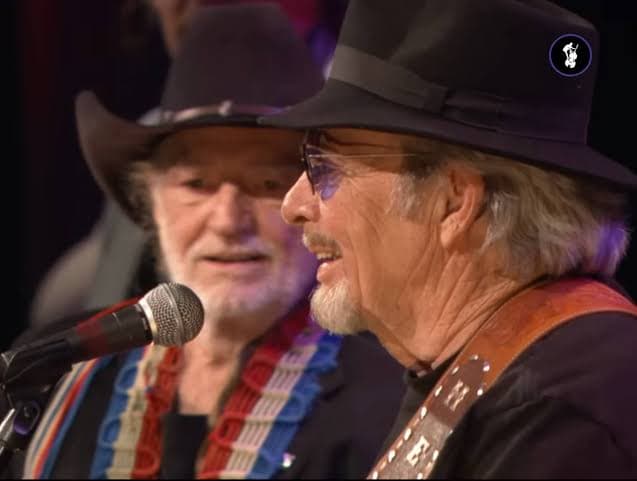
When Merle Haggard first released “Okie from Muskogee” in 1969, the song climbed to No. 1 on the Billboard Hot Country Singles chart and quickly became one of the defining records of his career. Issued on the live album Okie from Muskogee, the song arrived during one of the most culturally fractured moments in modern American history. Alongside fellow outlaw spirit Willie Nelson, who would later perform and reinterpret the song with Haggard in ways that deepened its legacy, the tune endured not merely as a country standard, but as a lightning rod for conversations about patriotism, class identity, generational division, and the uneasy tension between tradition and rebellion.
What makes “Okie from Muskogee” so enduring is not simply its plainspoken lyrics or its deceptively cheerful melody. It is the ambiguity lingering beneath every line. On the surface, the song appears to be a proud declaration from conservative Middle America — a rejection of marijuana culture, anti-war protests, and the radical social changes sweeping through the late 1960s. Muskogee, Oklahoma, becomes less a geographical location than a symbolic refuge: a place where “leather boots are still in style,” where loyalty to country is unquestioned, and where ordinary working people feel alienated from the chaos unfolding on television screens and college campuses.
Yet the brilliance of Merle Haggard has always resided in his ability to inhabit characters without flattening them into caricatures. Raised in the shadow of hardship during the Dust Bowl migration, Haggard understood the psychology of displaced Americans better than nearly any songwriter of his generation. His father had been an actual Oklahoma migrant — an “Okie” — who traveled west searching for survival. That history gave the song an emotional authenticity often overlooked by critics eager to categorize it as either reactionary propaganda or ironic satire. In truth, it sits uneasily between both interpretations, which is precisely why it has survived.
Musically, the record avoids bombast. The arrangement is restrained, almost conversational, built on the steady pulse of honky-tonk instrumentation and communal singalong phrasing. There is no theatrical outrage in Haggard’s voice. Instead, he sings with the weary confidence of a man speaking for neighbors who believed their values had suddenly become unfashionable in national culture. That subtlety matters. The song’s power comes not from anger, but from the sense of cultural displacement buried inside it.
When Willie Nelson later shared stages and recordings with Haggard, the pairing added another fascinating layer to the song’s mythology. Nelson, long associated with countercultural independence himself, helped frame the piece less as a rigid political statement and more as a snapshot of a divided America trying to understand itself. Together, the two men embodied country music’s strange duality: fiercely individualistic yet deeply rooted in collective memory.
More than half a century later, “Okie from Muskogee” remains a cultural Rorschach test. Some still hear defiance. Others hear satire. Many hear loneliness — the sound of everyday Americans fearful that the country they recognized was slipping away. That complexity is why the song continues to echo long after the political slogans of its era faded into history. Beneath the humor and barroom charm lies something older and sadder: a portrait of Americans talking past one another, each side convinced the other no longer understands what home means.