
A Moonlit Promise That Turned Nostalgia into a National Celebration
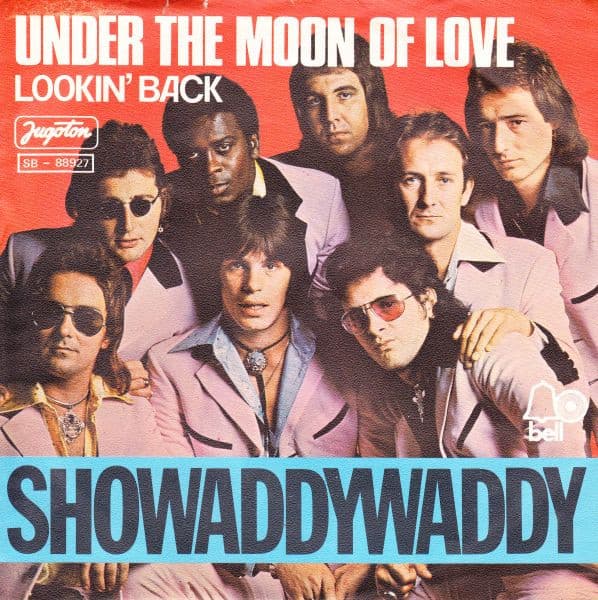
When Showaddywaddy released “Under the Moon of Love” in October 1976, few could have predicted that the Leicester rock-and-roll revivalists were about to score the defining hit of their career. The single climbed steadily to No. 1 on the UK Singles Chart, where it remained for three consecutive weeks, becoming the band’s only chart-topper and one of the biggest-selling records of the era. Originally featured as a standalone single before becoming a centerpiece of Greatest Hits (1976), the song transformed Showaddywaddy from a successful nostalgia act into one of Britain’s most beloved hitmakers.
What makes “Under the Moon of Love” endure is not complexity but sincerity. Written by Tommy Boyce and Curtis Lee and first recorded by Curtis Lee in 1961, the song was already a relic of an earlier America—a simpler world of teenage romance, street-corner harmonies, and dreams whispered beneath the glow of a summer moon. Yet when Showaddywaddy revived it fifteen years later, they did far more than cover an old tune. They resurrected an entire emotional landscape.
The lyrics themselves are remarkably straightforward. There are no grand declarations, no heartbreak, no dramatic twists. Instead, the song invites us into a gentle moment: a walk beneath the moonlight, a quiet conversation, a young man gathering the courage to tell someone he loves her. In another songwriter’s hands, such simplicity might have felt naive. Here, however, it becomes the song’s greatest strength. The absence of complication allows listeners to project their own memories into the music—the first dance, the first kiss, the nervous excitement of young love before adulthood arrived with its responsibilities and disappointments.
Musically, the recording captures the spirit of early-1960s rock and doo-wop while benefiting from the polished production values of the mid-1970s. The bright saxophone flourishes, buoyant rhythm section, and warm vocal delivery create an atmosphere that feels both timeless and celebratory. It is nostalgia without melancholy, remembrance without regret. Rather than mourning a lost past, Showaddywaddy invite listeners to relive it.
That emotional accessibility explains why the song became more than a hit single. For many listeners, “Under the Moon of Love” became a cultural time capsule—a record that instantly evokes dance halls, jukeboxes, and the enduring romance of classic rock-and-roll. Even decades later, its appeal remains remarkably intact because it speaks to something universal: the desire to preserve a perfect moment before it slips away.
In the vast catalogue of 1970s British pop, countless songs achieved commercial success. Few, however, captured the innocence of youthful romance with such effortless charm. “Under the Moon of Love” remains a reminder that sometimes the most powerful songs are not those that tell extraordinary stories, but those that make ordinary memories feel eternal.