
A prehistoric joke became a mirror for rock & roll’s longing to stay forever young.
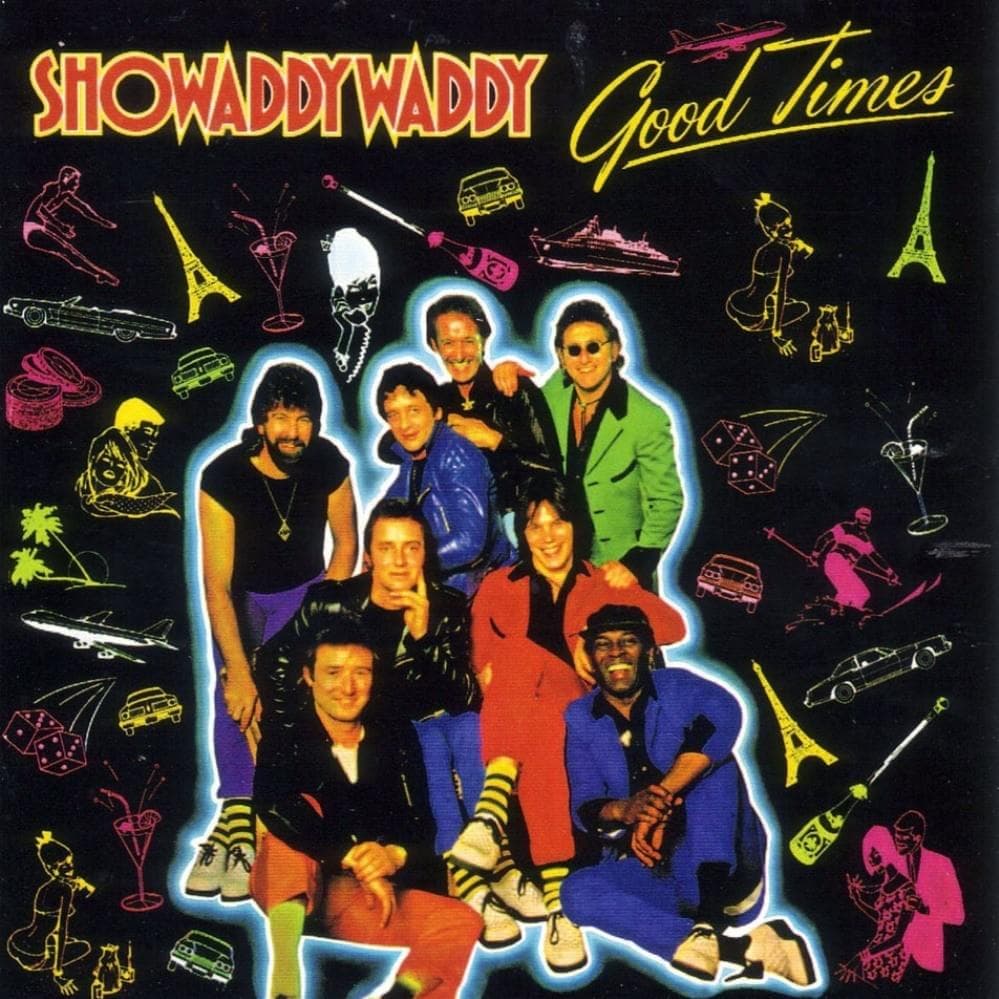
By the time Showaddywaddy recorded “Alley Oop” for their 1981 album Good Times, the band had already become one of Britain’s great custodians of 1950s revival rock. The Leicester group had spent much of the previous decade filling UK charts with harmonies, nostalgia, and a theatrical affection for early rock & roll culture. Yet unlike their major hits such as “Under the Moon of Love” or “When,” “Alley Oop” arrived less as a chart-conquering single and more as a cultural salute — a loving reconstruction of a song whose roots stretched back to the comic-strip absurdity of 1960 America.
The song itself was written by Dallas Frazier and first immortalized by The Hollywood Argyles, whose original version stormed to No. 1 on the Billboard Hot 100 in 1960. Inspired by V. T. Hamlin’s caveman comic-strip character, the record was delightfully ridiculous from the beginning: a prehistoric hero swaggering through a doo-wop rhythm while backing vocals bounced like cartoon sound effects.
But what makes Showaddywaddy’s interpretation fascinating is not novelty alone. By 1981, Britain was deep into post-punk reinvention, synth-pop was rising fast, and the innocence of old jukebox rock already felt like a fading photograph. In that climate, recording “Alley Oop” was almost an act of rebellion. Not against modern music itself, but against the idea that joy, simplicity, and theatrical fun had become outdated.
Their version leans heavily into that spirit. The stomping beat, gang harmonies, and exaggerated vocal phrasing are intentionally oversized, as though the band understood that the song only works when played with complete conviction. There is no irony in the performance. That sincerity matters. Lesser revival acts often treated old rock songs like museum pieces. Showaddywaddy treated them like living things.
And beneath the playful surface, “Alley Oop” carries a surprisingly enduring emotional subtext. Rock & roll has always romanticized physical freedom — the fantasy of movement without consequence, rebellion without age. Alley Oop, the fearless caveman hero, embodies exactly that instinct. He is primitive, loud, uncomplicated, and unstoppable. In many ways, he represents the same untamed energy that early rock music once brought into conservative living rooms during the 1950s.
That is why the song survived beyond novelty status and continued to be revived by multiple generations of artists. Every version becomes less about cavemen and more about cultural memory itself. When Showaddywaddy performed it, they were not simply covering a hit from another era; they were preserving the raw grin at the heart of rock & roll — the feeling that music could still be rowdy, communal, and gloriously unserious.
Listening now, decades later, the record feels almost strangely moving. Not because it aims for emotional depth in the traditional sense, but because it captures something disappearing: a time when rock music could still laugh at itself without losing its power.