
A Song About Longing for Home When Home Exists Only in Memory
When Roy Orbison performed “Blue Bayou” during his later concert years, audiences were hearing far more than a beloved hit from the early 1960s. Written by Roy Orbison and Joe Melson and featured on the landmark album In Dreams, the song first emerged as an international success in 1963. In the United Kingdom, it reached No. 3 on the singles chart as a double A-side release with “Mean Woman Blues,” while also becoming a No. 1 hit in both Ireland and Australia. Its chart achievements confirmed its popularity, but numbers alone cannot explain why “Blue Bayou” has endured as one of the most emotionally resonant performances in the Orbison catalog.
At its heart, “Blue Bayou” is a song about yearning. Yet unlike many songs of lost love, its longing is directed toward a place as much as a person. The bayou of the title functions as a dreamscape—an imagined sanctuary where peace, belonging, and emotional wholeness still exist. Orbison’s narrator is physically distant from that world, trapped somewhere between memory and desire, forever looking back toward a shoreline he can see only in his mind.
That theme was particularly suited to Roy Orbison, whose greatest recordings often explored emotional isolation. Throughout his career, he sang not as a conqueror of heartbreak but as its witness. In “Blue Bayou,” he abandons dramatic tragedy for something quieter and perhaps even more profound: homesickness of the soul. The lyrics paint gentle images of fishing boats, moonlit waters, and familiar landscapes, yet beneath those peaceful scenes lies a deep ache. The bayou is not merely a location—it represents a lost certainty, a place where life once made sense.
Musically, the song reveals the qualities that made Orbison unique among his contemporaries. The arrangement is restrained, allowing his voice to carry the emotional weight. Rather than relying on overt power, he gradually builds intensity through phrasing and tone. His vocal performance moves like a tide, rising and falling with natural elegance. Even when the melody soars, there is a vulnerability in his delivery that prevents the song from becoming sentimental. Every note feels earned.
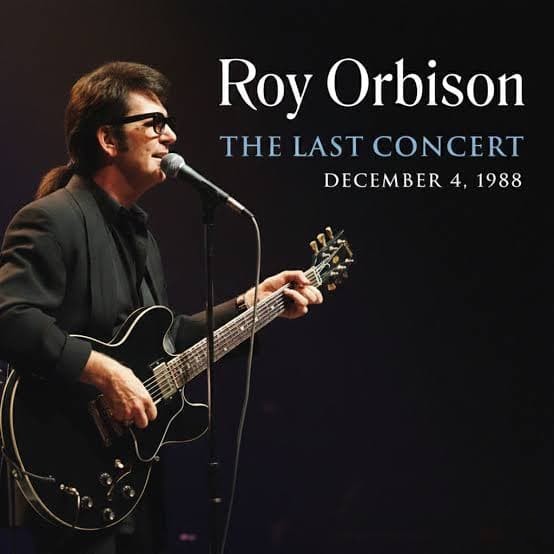
Hearing “Blue Bayou” in concert during the final chapter of Roy Orbison’s career added another dimension to its meaning. By then, audiences were not simply listening to a song about returning home. They were listening to an artist reflecting on a lifetime of memories, triumphs, losses, and perseverance. The passage of years gave the lyrics greater weight. What may have sounded like youthful longing in 1963 became, decades later, a meditation on time itself.
That enduring emotional truth explains why “Blue Bayou” remains one of the defining works in the Roy Orbison legacy. It speaks to anyone who has ever looked backward toward a vanished place, a lost moment, or a former version of themselves. The song never promises that the journey home will be completed. Instead, it captures something even more universal—the hope that somewhere beyond the horizon, the place we miss still waits for us.