
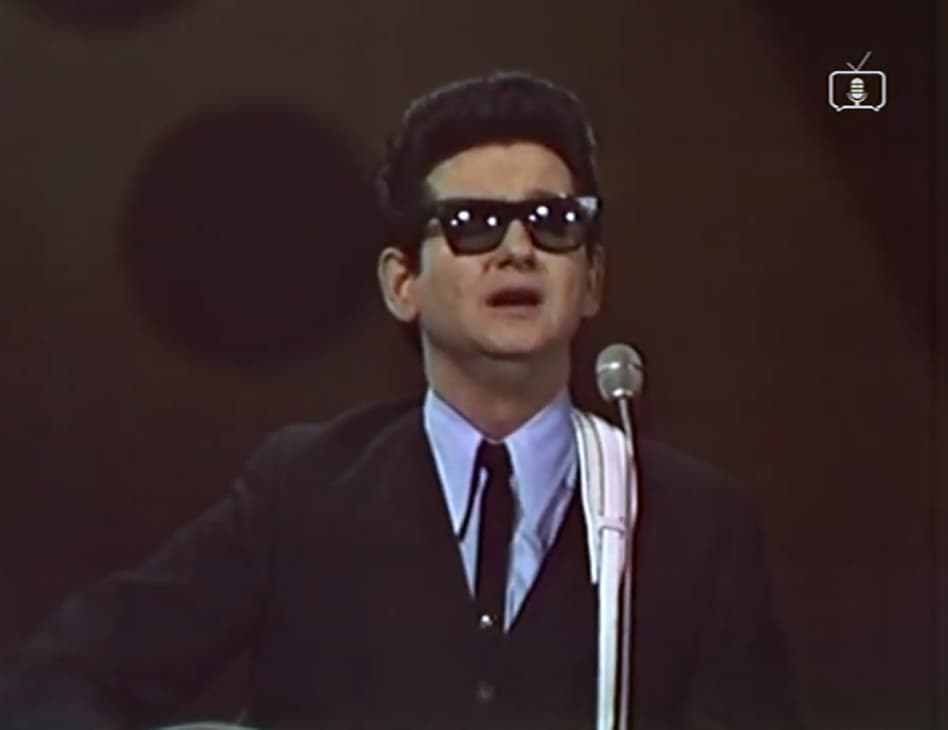
A Voice Beyond the Charts, Captured in a Moment of Timeless Elegance
When Roy Orbison stepped onto a London stage in 1966, he was already one of the most distinctive voices in popular music. By that point, classics such as “Only the Lonely,” “Running Scared,” “Crying,” and “Oh, Pretty Woman” had established him as an international star, with multiple Top 10 hits on both sides of the Atlantic. The performance preserved in Roy Orbison – London 1966 (Full Performance) does not belong to a specific studio album in the traditional sense; rather, it stands as a remarkable live document from a period when Orbison’s reputation rested not on spectacle or choreography, but on the sheer emotional power of his voice.
What makes this performance so fascinating is how perfectly it captures Orbison at the height of his artistic maturity. In an era increasingly defined by the youthful rebellion of the British Invasion and the psychedelic experimentation beginning to reshape popular music, Orbison remained an anomaly. Dressed in black, hidden behind his signature dark glasses, he projected neither rock-and-roll swagger nor folk authenticity. Instead, he offered something far rarer: vulnerability elevated to high drama.
Listening to this 1966 performance feels less like attending a concert and more like witnessing a series of emotional confessions. Orbison’s songs were never merely love songs; they were operatic meditations on loneliness, longing, heartbreak, and hope. His voice moved effortlessly from a gentle whisper to a soaring crescendo, often within the span of a single verse. Unlike many singers who relied on technical virtuosity to impress, Orbison used technique in service of emotion. Every rising note seemed connected to a human wound, every sustained phrase carrying the weight of memory and regret.
The London performance is particularly significant because it reveals the extraordinary consistency of his artistry. Studio recordings often benefit from multiple takes and careful production, yet Orbison’s live renditions demonstrate that the emotional intensity heard on his records was entirely genuine. Songs that audiences already knew by heart gained an added dimension in concert. The pauses became more dramatic, the silences more meaningful, and the climactic high notes felt earned rather than merely performed.
There is also a deeper cultural significance to this moment. By 1966, popular music was changing rapidly, but Orbison’s music remained rooted in universal emotions that transcended trends. While fashions evolved and genres shifted, the themes he explored—heartbreak, devotion, loneliness, and resilience—remained timeless. His work spoke directly to listeners who understood that some feelings cannot be outgrown or left behind.
Viewed today, Roy Orbison – London 1966 (Full Performance) serves as more than an archival recording. It is a portrait of an artist whose greatest instrument was empathy. The performance reminds us why Orbison continues to occupy a unique place in music history: he sang not as a hero conquering the world, but as an ordinary man navigating its sorrows. In doing so, he transformed personal pain into something universal, creating music that still resonates decades later with the same haunting beauty and emotional truth.