
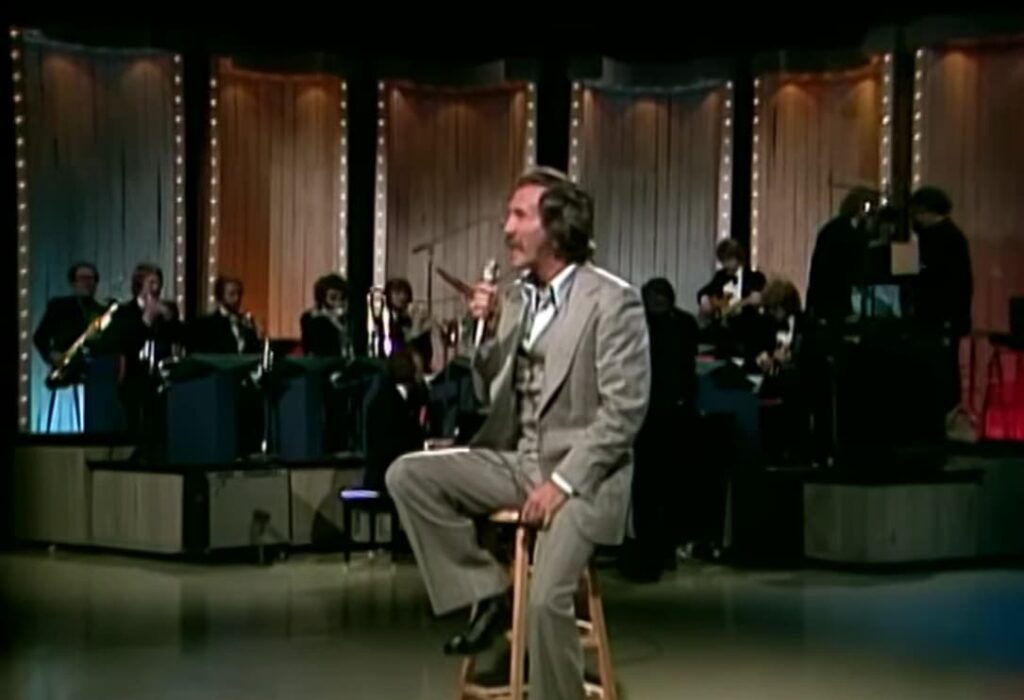
A single white sport coat becomes a timeless symbol of youthful hope meeting the quiet ache of heartbreak.
Few songs have captured the fragile optimism of adolescence as gracefully as “A White Sport Coat (Live)” by Marty Robbins. First released in 1957 as a studio recording, the song became one of Robbins’ defining early triumphs, climbing to No. 2 on the Billboard pop chart while reaching No. 1 on the country chart. It later appeared on the album The Song of Robbins, helping establish Marty Robbins as an artist whose appeal effortlessly crossed the boundaries between country and popular music. The live performance preserves not only the melody that audiences had already embraced but also the warmth and sincerity that made Robbins one of country music’s most beloved storytellers.
At first glance, the song seems remarkably simple. A young man has purchased a white sport coat and pink carnation for the high school dance, only to discover that his date has left him behind. Yet within that modest narrative lies a portrait of youthful innocence so authentic that it has resonated across generations. Robbins understood that heartbreak does not require grand tragedy. Sometimes it arrives in the form of an empty dance floor, an unworn jacket, or an evening imagined for weeks that dissolves before it even begins.
The brilliance of “A White Sport Coat” rests in its refusal to exaggerate emotion. Robbins sings with extraordinary restraint, allowing disappointment to emerge naturally rather than theatrically. His voice carries neither bitterness nor anger, only the bewilderment of someone encountering life’s first genuine emotional wound. That understated delivery became one of his defining artistic signatures. While later celebrated for expansive Western ballads like “El Paso,” Robbins demonstrated here that the smallest stories often possess the greatest emotional reach.
The symbolism embedded within the lyrics remains remarkably effective decades later. The white sport coat is more than fashionable clothing—it represents anticipation, hope, and the rituals of growing up. It is the uniform of a milestone, chosen carefully for an evening expected to become a cherished memory. Instead, it becomes a reminder of expectations unmet. Likewise, the pink carnation serves as a fragile emblem of affection, its delicate beauty contrasting sharply with the quiet loneliness of the evening. These ordinary objects transform into emotional artifacts, carrying the weight of dreams that never found fulfillment.
Musically, the composition reflects the transitional moment in American popular music during the late 1950s. Country traditions remain firmly rooted in the storytelling, while polished orchestration and smooth vocal phrasing opened the song to a much broader audience. Robbins possessed one of the most refined voices of his generation—clear, controlled, and effortlessly expressive. Rather than relying on dramatic flourishes, he trusted melody itself to communicate vulnerability. That confidence gives the song an enduring elegance rarely matched by recordings built around more elaborate arrangements.
The live rendition adds another dimension entirely. Hearing Robbins perform before an audience underscores how deeply this seemingly modest tale became part of the shared American musical experience. Listeners are no longer witnessing only the disappointment of one fictional teenager; they are revisiting their own forgotten evenings of anticipation, embarrassment, and first love. Every applause line serves as quiet confirmation that these emotions remain universal, untouched by changing fashions or passing decades.
The enduring legacy of “A White Sport Coat (Live)” lies precisely in that universality. It reminds us that growing older does not erase the memory of youthful vulnerability—it merely teaches us to recognize its value. Robbins transformed a high school dance into a meditation on innocence itself, preserving a fleeting chapter of life with remarkable tenderness. Long after the white jacket has faded from fashion and the dance halls have changed, the emotions woven into the song continue to feel immediate, proving that the finest country music often speaks most powerfully through life’s smallest moments.