
A Glittering Battle Cry for Youth in Revolt
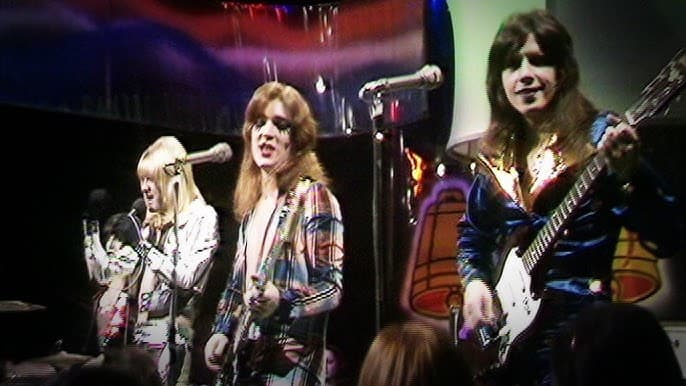
When “Teenage Rampage” stormed the airwaves in early 1974, it confirmed Sweet as architects of British glam rock’s most defiant anthems. Released as a standalone single and later included on the U.S. edition of Desolation Boulevard, the song roared to No. 2 on the UK Singles Chart, narrowly missing the summit but cementing the band’s commercial dominance. By the time of their electrifying appearance on the German television program Musikladen on February 20, 1974, Sweet were not merely riding a wave. They were defining it.
Written by the formidable songwriting partnership of Nicky Chinn and Mike Chapman, the song distills the essence of early 1970s adolescent unrest into three furious minutes. Yet “Teenage Rampage” is not a protest song in the folk tradition, nor is it weighed down by overt political commentary. Its rebellion is more primal, more theatrical. The rampage it announces is emotional rather than ideological. It is the sound of a generation impatient with restraint.
From its opening chant, the record erupts with a gang vocal that feels less like a melody and more like a rallying cry. The production is stacked high with distorted guitars, handclaps, and a percussive stomp that practically demands movement. Brian Connolly’s vocal performance is particularly striking. He does not croon. He declares. There is a metallic edge in his delivery, a sneer that fits perfectly within glam rock’s cultivated excess.
Lyrically, the song operates through repetition and slogan. “Everybody needs a teenage rampage” becomes less a statement and more an incantation. The phrase suggests catharsis, an almost ritualistic shedding of constraint. In this sense, the song aligns with glam’s larger aesthetic. Glitter and platform boots may have adorned the stage, but beneath the spectacle lay a genuine hunger for liberation.
The Musikladen performance crystallizes this energy. On television, stripped of studio polish yet amplified by stage presence, Sweet embodied the paradox of glam. They were at once cartoonish and dangerous, choreographed yet chaotic. The camera captures not just musicians performing a hit single, but a band reveling in its own combustion.
In retrospect, “Teenage Rampage” stands as a defining artifact of its era. It bridges the raw immediacy of early 1970s hard rock with the stylized flamboyance that glam perfected. More importantly, it captures a universal moment: the fevered urgency of youth before compromise sets in. Decades later, the chant still resonates, not because it promises revolution, but because it celebrates that fleeting, incandescent state of wanting to tear down the walls simply to prove you can.